


When taking care of a loved one, selecting the right equipment to help ensure everyone’s comfort and safety is a priority. A patient lift can increase everyone's confidence that these priorities are maintained during transfers. At Med Mart, we offer mobility equipment that supports patients as well as safeguards caregivers. We find individualized solutions to ensure you are finding the right solution.
What Are Manual Patient Lifts?
Manual patient lifts are easy to use and are a budget-friendly option. It is important to know and understand how this device operates. It has a crank, which requires the caregiver to manually pump a lever to guide the lift's movements. This can be a physical challenge for some users, especially when used frequently throughout the day. These lifts are also referred to as manual hydraulic patient lifts.
Types of Manual Patient Lifts
Understanding the differences between the types of manual patient lifts is key when selecting the best option to suit your needs.
Hydraulic (Pump-Based) Patient Lifts
These lifts are manually operated with a hydraulic pump to lift and lower patients. There are multiple brands and manufacturers that produce this style of lift. This product offers assistance with transfers, reducing strain on a caregiver; however still requires physical effort as it is not fully electric.
Manual Sit-to-Stand Lifts
These lifts are designed for patients, assisting in lifting them during the transition from sitting to standing position. It is ideal for individuals with partial mobility who need caregiver support for safer operation.
Manual Ceiling Lifts (Non-Motorized Track Systems)
These lifts operate across overhead tracks without a motorized system. Caregivers have to transfer patients along the track manually. This is a good option when space is limited. Operating and storing a patient lift requires floor space.
Physical Strain on Caregivers
Repetitive Motion Fatigue
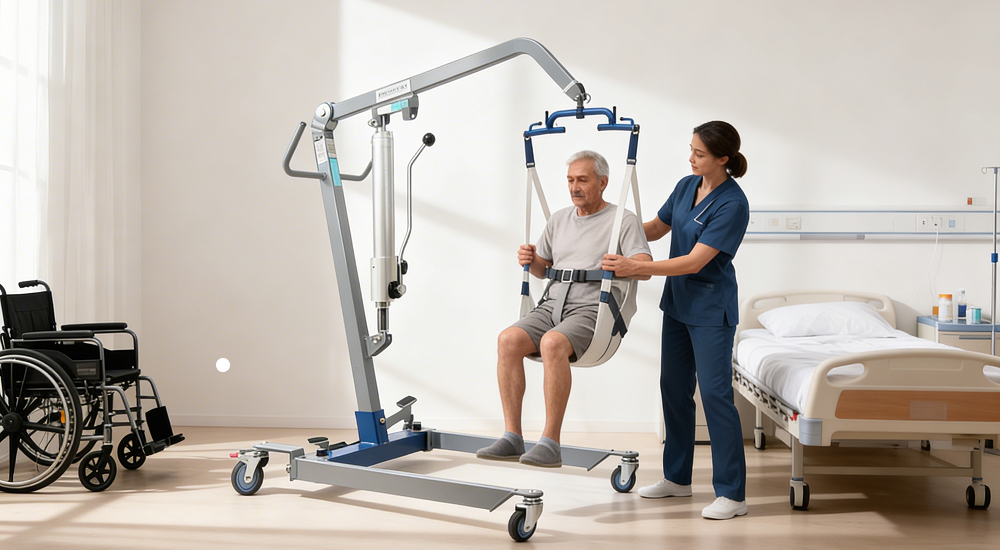
Repetitive pumping, lifting, and transfers place consistent pressure on muscles and joints. In addition to daily fatigue and possible strain/pain, this can lead to more serious issues over time.
Lower Back and Spine Strain
Operating manual lifts requires bending, twisting, and stabilizing during patient transfers. The movements can cause pressure on the lower back and spine. This can lead to chronic pain and injury, misalignment of the spine, muscle stiffness, and reduced flexibility. Ultimately leading to restricting caregiving ability.
Shoulder and Upper Body Stress
Manual lifts heavily rely on upper body strength, especially shoulders and arms. Constant use can overload these parts of the body, causing discomfort and reduced mobility over time, which could ultimately restrict caregiving ability.
Long-Term Caregiver Burnout
Constant physical stress may lead to emotional fatigue and burnout. When caregiving turns physically straining, it impacts the caregiver’s well-being and quality of care. This can lead to physical exhaustion, buildup of emotional stress, decrease in motivation, and reduced care quality.
Choosing a well-suited patient lift can help eliminate these risks. We understand it can be overwhelming; there are so many options. We want to help make this process easier. Our experts can answer any questions and help evaluate your specific needs.
Popular Manual Patient Lifts Offering Reliable Support
Hoyer® Deluxe Hydraulic Patient Lift
Hoyer® Deluxe Hydraulic Patient Lift is the new stable, quality, and efficient solution to ensure patient safety during transfers. Its ergonomically designed features can help the caregivers provide stability and comfort during transfers.

Hoyer® Deluxe Hydraulic Patient Lift
Product Highlights
- Modern painted frame design
- Ergonomic pump handle placement
- Dual-side pump operation
- Adjustable base leg width
- Easy disassembly storage
- Supports up to 400 lbs
Best For: Home caregivers seeking a reliable, durable lift for daily patient transfers
Protekt® Transformer Hydraulic Patient Lift
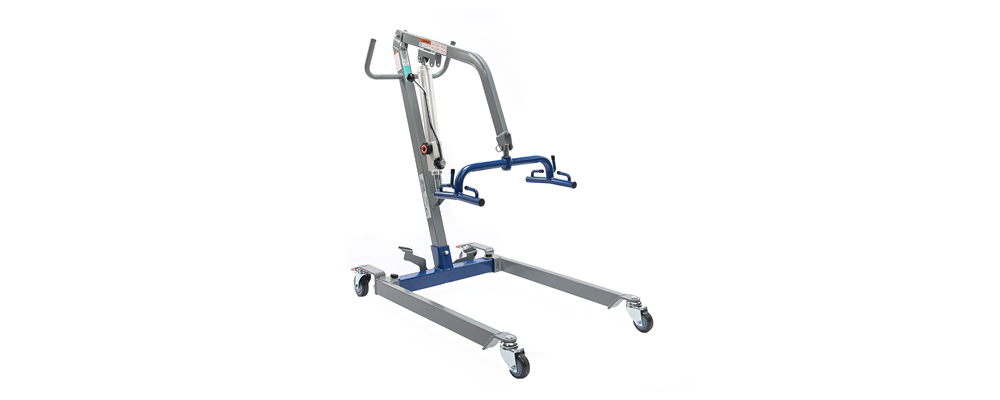
Protekt® Transformer Hydraulic Patient Lift is both versatile and durable. This lift is ideal for use in both at-home and professional environments. Its ergonomic design makes this lift safer, more flexible, and extremely convenient for use.
Protekt® Transformer Hydraulic Patient Lift
Product Highlights
- Supports up to 400 lbs
- Six-point sling stability system
- Tool-free quick assembly
- Manual adjustable base legs
- Fast disassembly for storage
- Durable steel frame construction
- Smooth rolling locking casters
- Optional digital scale add-on
- Optional battery power upgrade
Best For: Caregivers seeking a versatile patient transfer solution with easy-to-use lifts with adjustable features.
Spryte Stand Aid Fixed Base
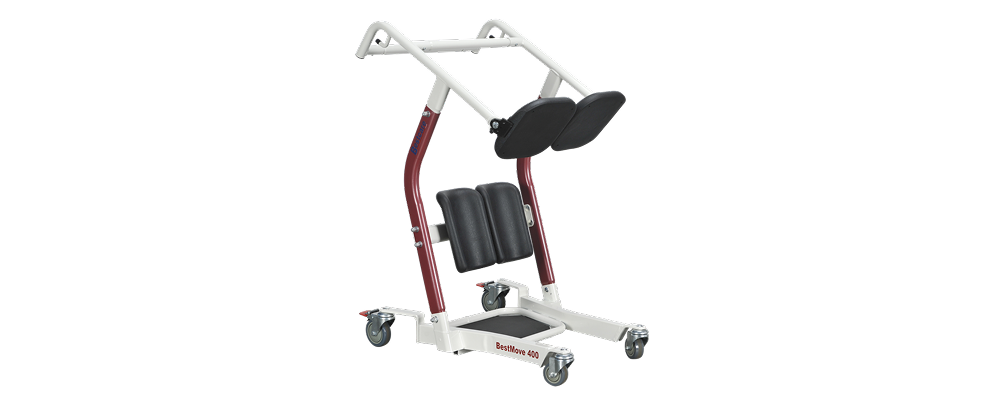
The Spryte Stand Aid Fixed Base is designed for patients with partial mobility. It offers consistent, low-risk support through sitting-to-standing transfers and reduced workload for caregivers.
Product Highlights
- Fits narrow door spaces
- Comfortable padded transport seat
- Dual knee support pads
- Requires patient stability
- Secure padded seating
- Hooks for support straps
Best For: Patients who require safe assisted standing and transfer.
When Manual Patient Lifts Are a Good Choice
In some cases, manual patient lifts are the most effective and practical solution. When used as directed by manufacturers, they are a reliable support for individuals with limited mobility.
They are perfect for:
- Situations demanding occasional or less frequent patient transfers
- Home care environment with a trained caregiver
- Patients with partial mobility
- Settings where cost-efficiency matters
- Cases where electrical access might be limited
Explore More Patient Lift Solutions at Med Mart
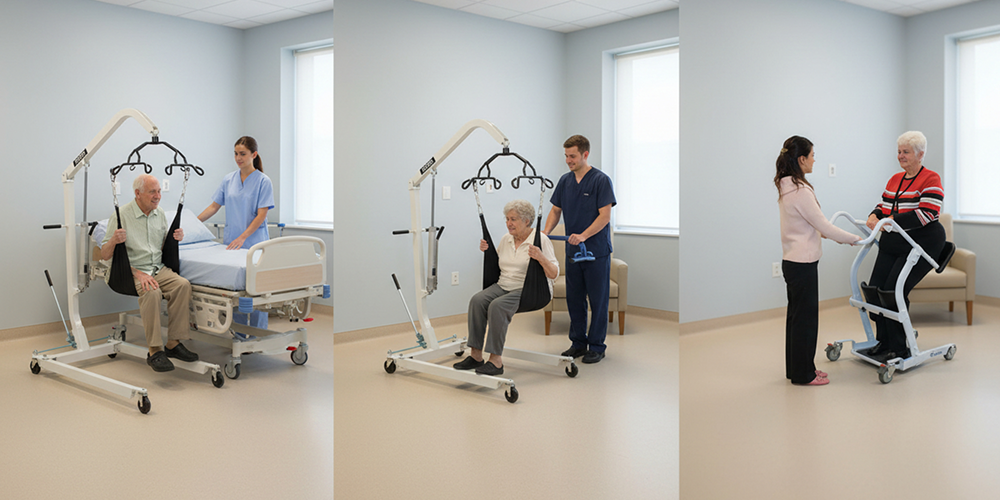
Med Mart offers a wide range of patient lift solutions, suited to various care requirements. This benefits caregivers to balance patient safety, comfort, and effectiveness.
Electric Patient Lifts
Electric patient lifts are also powered devices that perform lifting duties without causing physical strain. They greatly reduce caregiver stress and offer controlled, smooth, and safer patient transfers across different care facilities.
Sit-to-Stand Patient Lifts
Sit-to-stand lifts are meant to be used by patients with some weight-bearing capacity. They help with standing transitions, encourage independence, and reduce the physical burden on caregivers.
Heavy-Duty Patient Lifts
The heavy-duty lifts are designed for increased weight-lifting ability and durability. They provide stability and safety for bariatric patients, as well as consistent performance across their frequent caregiving settings.
Folding Patient Lifts
Folding patient lifts offer convenience and portability. They are easy to store or transport and are therefore suitable in the home care setting, where space-saving solutions are needed.
Specialty Patient Lifts
Specialty lifts are tailored to specific needs and transfers.
Supporting Safer Care Starts with the Right Equipment
Our sales team will help you select the right lift. They will identify potential challenges and review the differences in lifts to achieve safe and long-term care for both the user and caregiver.
At Med Mart, we stay committed to helping seniors, caregivers, and patients find the right mobility solutions for their physical needs. Explore our full range of patient lifts or contact us today to explore mobility equipment for enhanced comfort and safety across patient care!
Frequently Asked Questions
1. How much weight can a manual patient safely lift?
A standard manual patient lift will support between 300 and 450 pounds. It is important to check each model's weight capacity because it can vary.
2. Do manual patient lifts require regular maintenance?
Yes, hydraulic patient lifts require regular inspections of the hydraulic system, wheels, and joints to ensure safe use.
3. Can one person operate a manual patient lift alone?
It is always important to read the owner's manual and follow the manufacturer's guidelines. In a home-care setting, one caregiver may operate a manual lift.
4. Are manual patient lifts suitable for home use?
Yes, it is important to ensure the home has enough space to maneuver the equipment safely.
5. What accessories are needed with a manual patient lift?
A sling is required on most patient lifts. Some models also have support straps and positioning aids available. These can be used to enhance comfort, safety, and alignment during patient lifting and transfers.