


Maybe there was a fall, a surgery, or a condition that made it impossible for your loved one to move safely on their own. At some point, many families find themselves asking the same questions: How can I safely help my loved one move without risking injury to them or myself? The answer to this is a patient lift to make daily transfers easier for seniors, patients recovering from injuries, or people with limited mobility.
However, one of the most important decisions a caregiver or family member can make is choosing a patient lift. The wrong choice will lead to frustration, wasted money, caregiver injuries, and serious safety risks for the person being transferred.
At Med Mart, we have spent decades helping families get this right the first time. Our goal is not to sell a patient lift, but to help families make the safest and most practical choices for their unit's needs.
What is a Patient Lift and Why Do You Need One?
Patient lifts are important mobility devices that help move a person with limited mobility between surfaces. They do the heavy lifting, relieving caregivers of the burden of manual transfers. A good lift safeguards both the patient’s body and the caregiver’s back.
You’ll likely need one if your loved one:
- Cannot walk or stand without relying on a caregiver’s assistance
- Is recovering from a stroke, surgery, or a serious illness
- Has serious muscle weakness or has paralysis
- Is a bariatric patient seeking additional mobility support
Besides safety, the right lift also safeguards a patient’s dignity. Transfers from a bed to a wheelchair become easier and safer.
Mistakes to Avoid Before You Buy
When choosing a patient lift for the first time, it is easy to overlook details that matter. These oversights cost you money, pose safety risks, or leave you with a lift that doesn't work for your situation.
So, here are a few common mistakes you should always avoid:
- Buying based on price alone, without checking the weight capacity
- Choosing a sit-to-stand lift for a patient who cannot bear weight
- Choosing the wrong sling size
- Assuming the sling comes with the lift
- Not measuring doorways and room space before purchasing
- Accepting a manual lift from insurance without considering the electric upgrade
- Waiting for a crisis before starting the search
Types of Patient Lifts Explained
There are different types of patient lifts, each serving a dedicated purpose. Selecting the right type involves a better understanding of how much help the patient needs.
Full Body / Hoyer-Style Lifts
These lifts use a sling that supports a patient’s whole body. The lift fully supports a patient during the transfer, helping them move safely from one location to another without any physical strain on the caregiver.
Best for: Patients with partial or no ability to support themselves
Common transfers
- Bed to wheelchair
- Wheelchair to toilet
- Bed to shower chair
Available as: Manual (hydraulic pump) or electric (battery-powered).
Sit-to-Stand Lifts
Sit-to-stand patient lifts are ideal for users who can bear some weight on their legs. The lift helps them move seamlessly from a seated to a standing position and then pivots them onto a new surface. They support mobility by helping people stand and assisting with transfers.
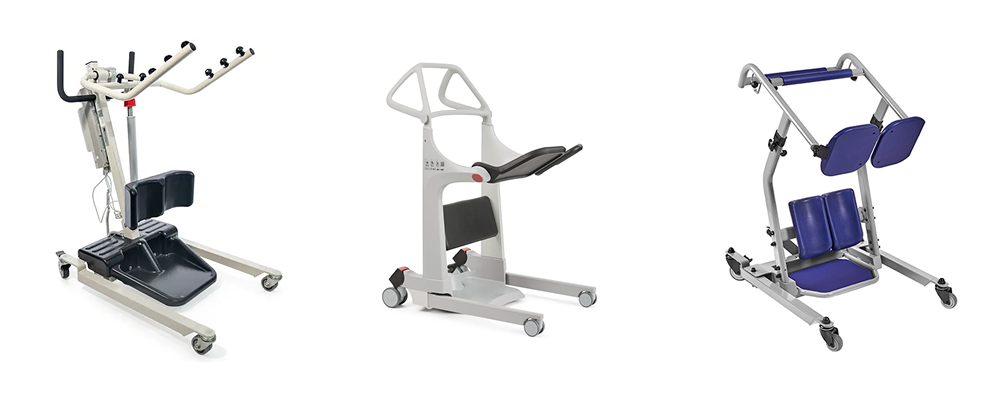
Best for: Patients with partial lower body strength who can actively participate in transfers.
Common transfers
- Chair-to-chair transfers
- Bed to wheelchair transfers
- Bathroom assistance
Benefits for Users
- Encourages patient participation
- Supports rehabilitation goals
- Faster transfers
- Often smaller and easier to move
Manual Lifts
Manual lifts use a hydraulic pump to raise and lower the patient. Upfront costs are lower, but caregivers must manually operate the lift, which can become physically demanding when transfers are frequent.
Benefits
- Less purchase cost
- No batteries required
- Reliable mechanical operation
Best For
- Occasional transfers
- Budget-conscious buyers
- Care situations with multiple caregivers available
Electric / Power Lifts
Electric power lifts are battery-operated and use simple hand controls. There is no pumping or pulling involved. They are an ideal option for patients seeking frequent transfers, facilities, and individual caregivers. Although these lifts may cost more initially, they can reduce the physical demands of caregiving.
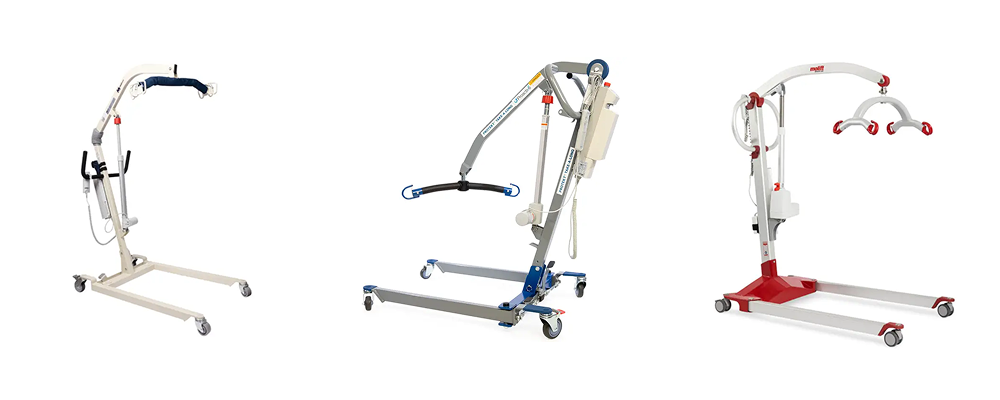
Benefits
- Easier on caregivers
- Ideal for frequent transfers
- Suitable for single-caregiver households
- Smooth and controlled lifting
Best For
- Daily use
- Long-term caregiving
- Healthcare facilities
- Caregivers with physical limitations
The higher upfront costs do not matter for families as electric lifts offer better long-term value and convenience.
Weight Capacity: Not Optional
Most families make the mistake of guessing at the weight capacity. It will never work.
Exceeding the rated limits puts both the patient and caregiver at serious safety risks during a transfer.
It is important to know:
- Standard lifts support around 300 to 450 pounds
- Bariatric lifts can go up to 500 to 1000 pounds
- Always choose a lift with a capacity that comfortably exceeds the user’s current weight to allow for clothing, accessories, and future needs.
- Ensure you verify the weight rating of the sling separately, as it has its own limit
- Always account for possible weight changes over time
Sit-to-Stand vs. Full Body Lifts — How to Decide
This is another major decision, and the answer entirely depends on the patient.
Full body lift (Hoyer-style)
Ideal for patients who are unable to safely support their own weight. The lift does all the work. Best for more serious mobility cases.
Sit-to-stand lift
Ideal for patients with partial leg strength and balance who can participate in the transfer. A simple rule that is shared by experts is that patients should be able to bear at least 30% of their own weight for this lift to operate safely.
So, when you are unsure which one is right, the experts at Med Mart suggest two key steps:
- Always consult a healthcare provider involved in the patient’s care. A physician or physical therapist can help you identify the right lift and practice safe transfers.
- Contact us at Med Mart. Our product specialists will review your transfer needs, the patient’s condition, and the environment to guide you to the right model.
Sling Selection — The Often Overlooked Factor
One of the most overlooked factors is the sling, and it matters most when selecting a patient lift. The slings directly impact comfort, support, safety, and the patient's experience during every repositioning or transfer.
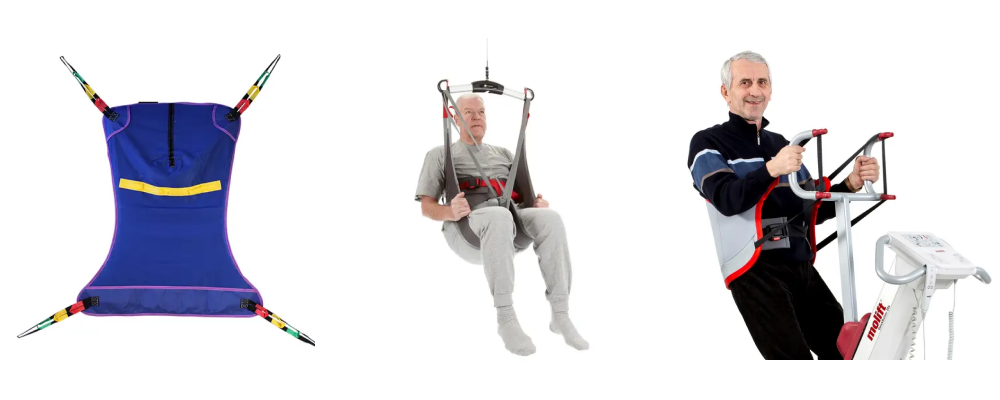
Every situation demands different sling types that include:
Full-Body Slings
Full-body slings make transfers safer by providing support from the head to the legs. Typically, they are used for people who need additional stability and caregiver assistance.
Positioning Slings
A positioning sling assists caregivers in adjusting a person to a safe position in a bed or chair. Often, they are used to enhance comfort and eliminate pressure points.
Toileting Slings
Toileting slings help with seamless and more convenient bathroom transfers. Their open-ended design enables easier access during routine hygiene.
Amputee Slings
These slings provide additional support and balance for people with limb loss. Their design helps ensure safer, more secure transfers.
Standing Slings
Standing slings are used with sit-to-stand lifts supporting standing transfers. They help users remain stable while participating in movement.
If a sling doesn’t fit right, the whole system feels unsafe and awkward. So, ensure to size it carefully and always confirm its compatibility with your specific type of lift.
Home Use vs. Facility Use
Another important factor to consider when choosing a patient lift is whether it is being used at home or in a facility.
Home Use Considerations
Home care settings have their own share of challenges. So before investing in a patient lift, ensure to assess:
- Width of doorway
- Room dimensions
- Bed clearance space
- Furniture layout
- Storage space
Additional considerations for families involve:
- Ease of operation
- Portability
- Budget
- Single-caregiver usability
Facility and Clinical Use Considerations
Healthcare units will need equipment that can support frequent use. So the integral factors included are:
- Durability
- Higher weight capacities
- Multiple patient needs
- Staff training requirements
- Compliance standards
Facilities may also benefit from ceiling lift systems that reduce floor clutter and enhance the efficiency of patient transfers.
Caregiver Needs — Don't Forget the Person Operating the Lift
A patient lift should be convenient for both patients and caregivers. So, the main questions you should always consider asking are:
- Does the caregiver have physical limitations?
- Will one person perform transfers alone?
- How often will transfers occur?
For most solo caregivers, the best choice is an electric patient lift, as it reduces physical effort.
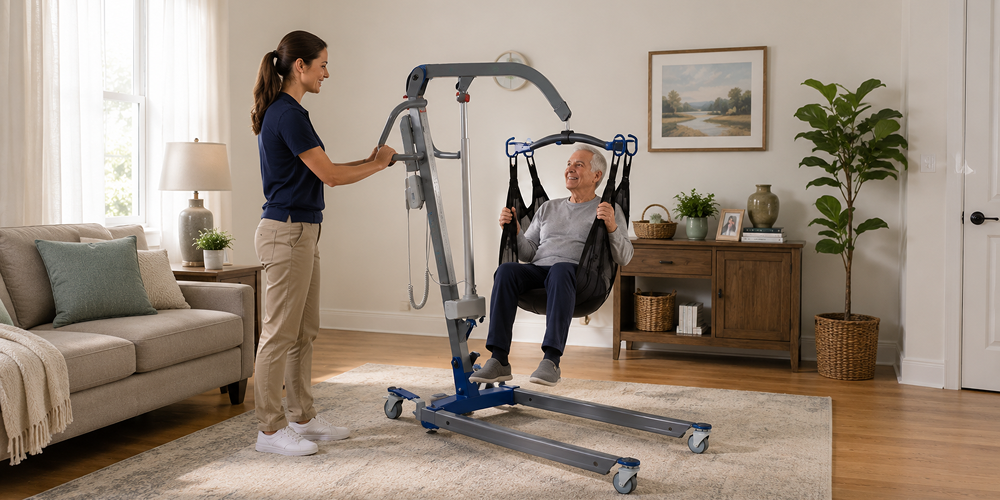
Ensure you check for features such as:
- Easy-to-use controls
- Smooth maneuverability
- Comfortable handle placement
- Clear battery indicators
Selecting the right lift reduces caregiver stress, fatigue, and long-term risk of injuries.
Think About Your Home Before You Buy
Where will the lift actually be used? This is one of the most overlooked factors when choosing a patient lift. It is easy to miss until your lift arrives and fails to fit through the hallway.
So, before contacting us at Med Mart, ensure you have these answers ready:
- What is the width of your narrowest doorway, such as a bathroom, bedroom, or hallway?
- Can the lift roll through those doorways and turn into position by the bed?
- Is there a thick carpet that could affect wheel traction?
- Is there enough space to store the lift in a closet or out of the way when not in use?
Staying prepared with these critical details means that our specialists will help you find a lift that actually works in your home.
The Right Lift Makes Everything Easier
There is no one-size-fits-all answer here. The right patient lift depends on the user’s mobility, home layout, the caregiver’s ability, and how frequently transfers happen. So, getting it right ensures safer transfers, less physical strain, and more independence for your loved one.
Consult with a Med Mart specialist today before you buy. Call us at 888-260-4430 for expert guidance on patient lifts, slings, and transfer solutions!
Frequently Asked Questions
1. Does the lift come with a sling?
Usually not. Slings can be purchased separately because they should be sized to the patient’s size, weight, and transfer type. Avoid the mistake of assuming that the bundled option is the right fit.
2. Insurance approved a manual lift. Should I just take it?
Coverage is not always the best choice. If transfers are required daily or you’re a solo caregiver, then a manual lift will tire you quickly. So, ask about the upgrade cost to electric options, as it’s often worth it.
3. How do I know which type of lift my loved one needs?
Always check whether your loved one can put weight on their legs and hold a support bar. For them, a sit-to-stand lift may work. However, if they are unable to support themselves at all, choose a full-body lift. Contact us if you are unsure, as we’ll help you assess.
4. Will a patient lift fit in a small home with narrow doorways?
Most home-use lifts are built for compact spaces. So, make sure to measure your doorways, as most standard models fit through 32 inches. Portable and compact options are also available.
5. Does price really matter when buying a lift?
Absolutely! A very cheap lift might skip necessary safety certifications or use materials that wear out fast. You don’t need an expensive model, but one that is properly rated and offered by reputable suppliers. At Med Mart, we can help you find the right balance.