If you deal with back pain, you already know how much the wrong chair can affect your day. A recliner that’s too soft, too deep, or the wrong size can leave you constantly shifting to get comfortable. And if getting up is already difficult, a low or unsupportive chair can make that part harder too. That’s why we wouldn’t recommend choosing a lift chair based only on how plush it looks or how many features it has. A chair can check every box on paper and still be the wrong fit for the person sitting in it. Seat depth, lumbar support, leg position, backrest angle, overall size, and how the chair moves you toward standing all deserve some attention. If back discomfort is part of the reason you’re shopping, those details matter even more.
What Makes a Lift Chair Different from a Regular Recliner?
A lift chair looks a lot like a traditional recliner, but the base is powered. When activated, the chair rises and tilts forward to help bring the user toward a standing position. It can also make sitting back down feel more controlled.
That lifting motion is especially helpful for someone who has trouble pushing up from a low chair, but it’s only part of what these chairs can do. Depending on the model, you may also find adjustable lumbar support, power headrests, independent back and footrest controls, zero gravity positioning, heat, massage, extended footrests, and multiple chair sizes. Some of those features are genuinely useful, and others may not matter that much to you at all. That’s the thing with lift chairs: the best features are the ones you’ll actually use.
What to Consider When Choosing a Lift Chair for Back Pain
Fit Comes Before Features
This is one of the biggest things we’d want someone to understand before buying a lift chair: fit comes first. A chair can have power lumbar, heat, massage, and several motors, but if the seat is too deep or too tall for you, none of that is going to make it the right chair.

Seat depth is a good place to start. When you sit all the way back, your knees should bend comfortably without the front of the seat pressing too hard into the backs of your legs. If the chair is too deep, a shorter person may slide forward instead of sitting naturally against the backrest. If it’s too shallow, a taller person may not get enough support under their thighs.
Seat height matters too. If it’s too low, getting up can take more effort. If it’s too high, your feet may not rest comfortably where they should. Width is similar. You want enough room to sit comfortably, but wider isn’t automatically better. The chair should feel supportive, not oversized. Back height also matters more than people sometimes realize. Your shoulders, neck, and head should line up naturally with the chair. That’s one reason many higher-end lift chairs come in multiple sizes instead of trying to make one chair work for everyone.
Lumbar Support Is Helpful, but It’s Personal
People shopping for a chair because of back discomfort often go straight to lumbar support, and that makes sense. But more lumbar support isn’t automatically what’s best. Some people like a noticeable amount of support in the lower back. Others find that uncomfortable, and honestly, it really comes down to how the chair feels to you personally.
Power lumbar support gives you more flexibility because you can adjust it instead of relying on one fixed shape. You might want more support while sitting upright and less when reclining. That ability to fine-tune the chair can be more useful to you than simply choosing whichever model says “lumbar support” on the feature list.
Independent Positioning Gives You More Control
Basic recliners often move the backrest and footrest together. Premium lift chairs may use multiple motors, which lets you adjust those areas independently of each other. That makes a real difference in everyday use!
You may want your feet up while keeping your upper body only slightly upright. Later, you might want to recline farther without changing your leg position. If you have a tendency to get uncomfortable after sitting one way for too long, having several ways to reposition yourself can be a big deal.
Types of Recliners & Lift Chairs
Different lift chair styles solve different parts of the problem, and knowing what each one offers makes the choice much clearer:
- Power Recline Lift Chairs
- Infinite Position Power Recliners
- 3-Position Power Recliners
- 2-Position Power Recliners
- Heavy-Duty Power Recliners
Each lift or recliner chair style offers different positioning, fit, and support options. Matching those features to the person’s needs matters more than simply choosing the top-ranking option.
5 Med Mart Lift Chairs to Consider for Back Pain
Comparing individual models makes it easier to see how these features come together in real products. Here are five chairs that offer different options for lumbar comfort, recline positioning, fit, and stand-assist support.
VivaLift!® Ultra Lift Recliner
The VivaLift! Ultra Lift Recliner pairs a stand-assist lift with adjustable heat and lumbar massage. Independent backrest and footrest positioning also gives the user more control over how they sit and recline.
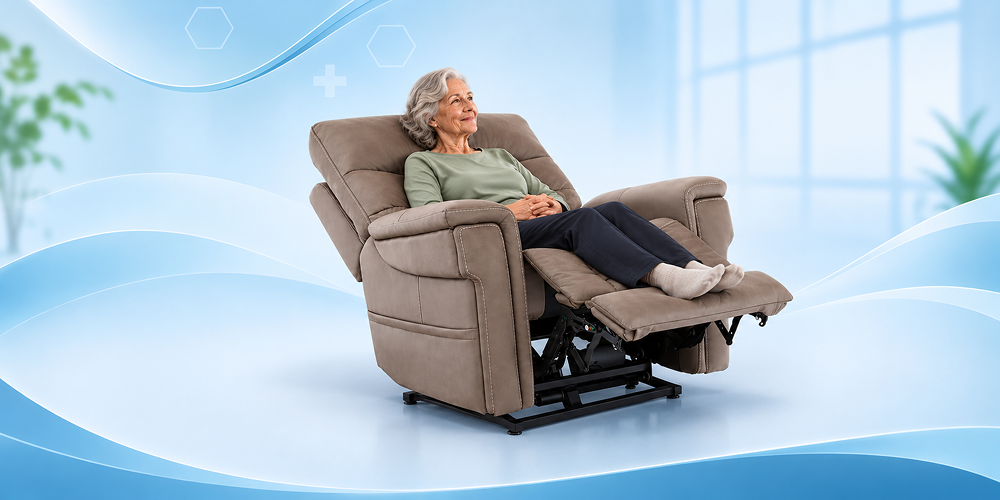
VivaLift!® Ultra Lift Recliner
Product highlights
- Can hold up to a 400-pound weight capacity
- Three massage settings for added comfort
- Three-zone heat therapy pads
- Genuine-infinites backrest positioning
- Stand-assist with upward lift positioning
- Features adjustable power lumbar support
Use cases
Ideal for someone who wants adjustable lumbar support, massage and heat features, along with stand-assist support.
Cloud MaxiComfort® Power Lift Recliner
The Cloud MaxiComfort Power Lift Recliner features a bucket seat and chaise pad design to cradle the body evenly from head to toe. It offers zero gravity and Trendelenburg position options that allow users to adjust how their body is supported while reclining.
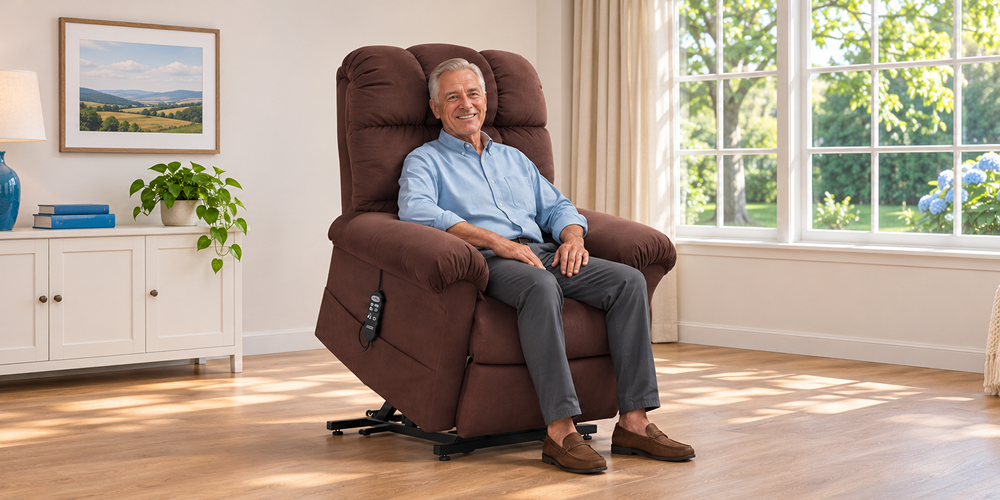
Cloud MaxiComfort® Power Lift Recliner
Product highlights
- Reclining positioning with zero-gravity support
- Trendelenburg position with a dedicated memory button
- Ergonomic bucket seat design
- Adequate leg support with chaise pad
- Plush biscuit-back cushioning
- Heavy-gauge spring seat support
Use cases
A strong option for someone who wants more positioning choices, including Zero Gravity and Trendelenburg, to adjust how the body is supported while reclining.
VivaLift!® Radiance Lift Recliner
The VivaLift! Radiance Lift Recliner offers a standard three-zone heat system alongside true-infinite positioning for the backrest and footrest. Independent power lumbar and headrest adjustments give the user more control over comfort and positioning.
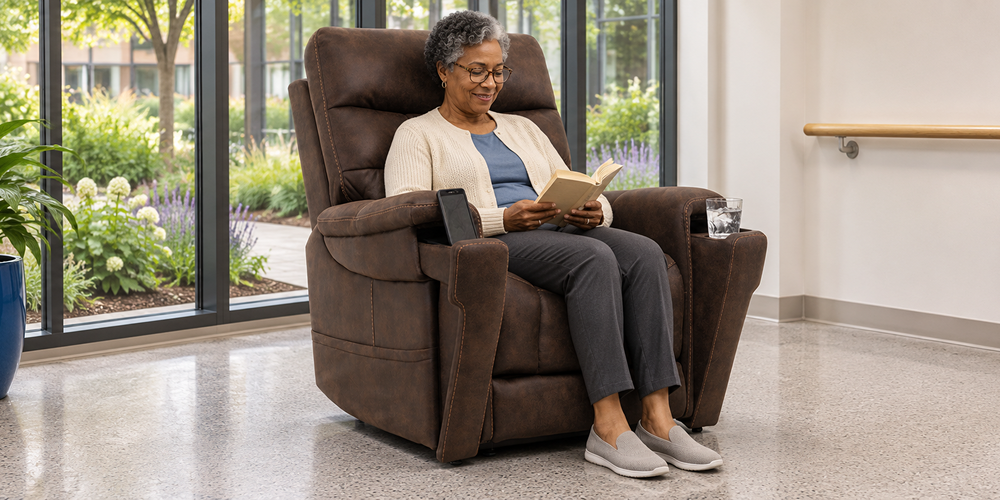
VivaLift!® Radiance Lift Recliner
Product highlights
- Three-zone standard heat system
- True-infinite backrest positioning
- Power headrest neck support
- Stand-assist upward lift
- Adjustable power lumbar support
- Footrest extension for stretching
Use cases
Ideal for someone who wants adjustable heat, lumbar, and headrest support, along with multiple chair sizes for a better fit.
Cloud Twilight Lift Recliner & Optional Nirvana
The Cloud Twilight Lift Recliner, with its optional Nirvana upgrade, uses a signature Twilight positioning design. Zero Gravity positioning, along with standard power lumbar and headrest support, gives the user several ways to adjust the chair for comfort.
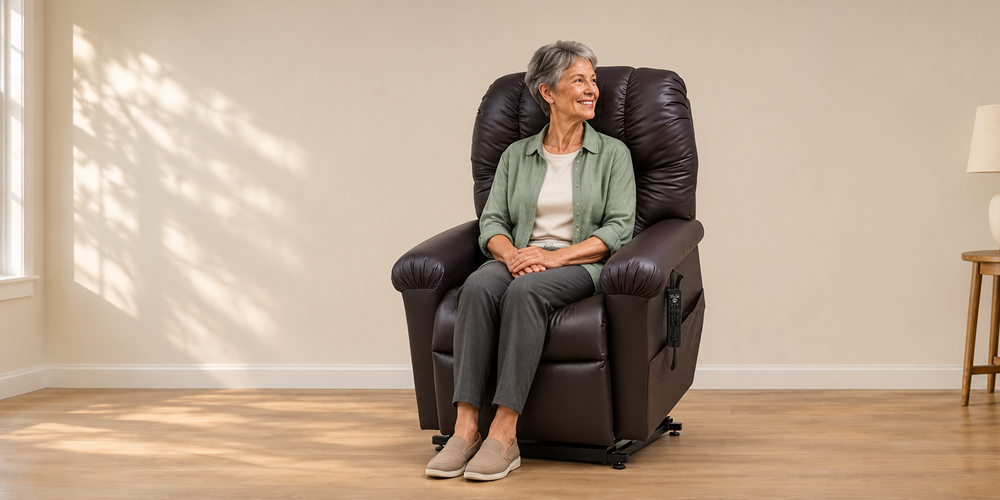
Cloud Twilight Lift Recliner & Optional Nirvana
Product highlights
- Zero Gravity relaxation positioning
- Signature Twilight cradling design
- Standard power lumbar support
- Standard power headrest support
Use cases
Great for someone who wants Zero Gravity positioning along with built-in lumbar and headrest support.
Comforter Extra Wide HD Lift Recliner
The Comforter Extra Wide HD Lift Recliner features built-in lumbar support and a full chaise pad for added comfort. Its stand-assist lift and Full Napper recline also provide a wider, sturdier seating option.
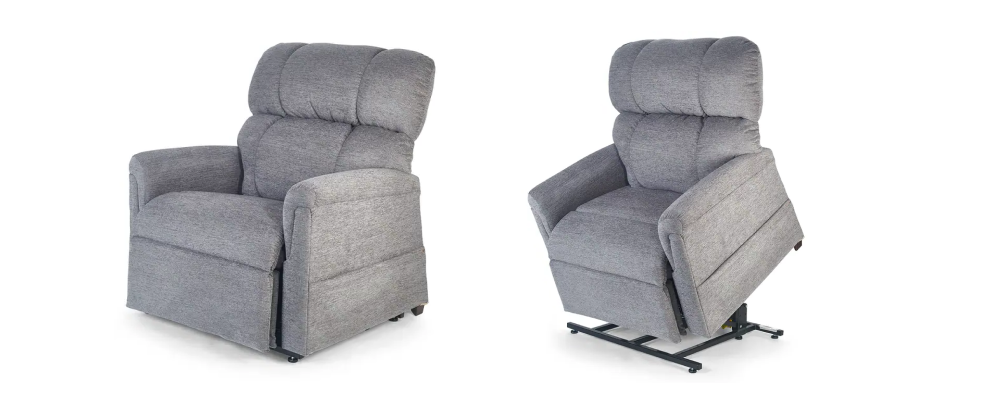
Comforter Extra Wide HD Lift Recliner
Product highlights
- Exceptional built-in lumbar support
- Full-body chaise pad support
- Gentle stand-assist lift motion
- Full Napper recline position
- Extended leg support extension
- Non-skid leg levelers included
Use cases
A solid choice for larger or taller users who want additional lumbar support, a wider seating area, and stand-assist support.
Comparing Recliners and Lift Chairs Becomes Simple With Med Mart's Online Selection
Looking only at the spec sheet is hardly enough when someone is choosing a chair with back comfort and positioning in mind. At Med Mart, we give every shopper real specs, customer reviews, and support from a product expert who knows lift chairs and recliners inside and out.
How Med Mart supports your buying decisions:
- Free shipping on every order priced over $50
- A direct price match guarantee across every comparable listing
- Free lifetime technical support post-purchase
- Eligible purchases through HSA and FSA guidelines
- Nationwide doorstep delivery to any address
Contact us today to compare lift chairs and recliners based on your comfort, positioning, mobility, and support needs.
Closing Thoughts
Back pain and comfort needs are different for everyone, and your choice of recliner or lift chair should reflect that. Some people may prefer extra lumbar support, while others may need more stand-assist support, different positioning options, or a softer cushion.
No matter the situation, comparing features instead of making assumptions can make the decision easier. Expert guidance and the right information can help you choose a chair that fits your comfort, positioning, and mobility needs.
Frequently Asked Questions
1. How do I know what size lift chair I need?
Don’t look at weight capacity alone. Height, seat width, seat depth, seat-to-floor height, and back height can all affect fit. Two people who weigh the same amount may still need very different chair sizes.
2. Does Medicare cover lift chairs?
Medicare Part B may cover a qualifying seat-lift mechanism when specific medical-necessity requirements are met. Medicare generally doesn’t pay for the entire upholstered chair, but one of our product specialists would be happy to assist you further relating to Medicare coverage.
3. So what does zero gravity mean?
Zero Gravity is a term you’ll see often when looking at premium lift chairs. It refers to a reclined position where the legs are elevated in relation to the torso. A lot of people like the way this position feels because it changes how the body is supported while reclining. It’s not a treatment for back pain, and not everyone will prefer the position.
4. Is heat or massage better for back discomfort?
That really comes down to preference. Both are comfort features. Some people like warmth, some enjoy massage, and some don’t care about either. We’d suggest you choose the chair for fit and positioning first.
5. Can the wrong recliner be uncomfortable?
Yes. A chair that’s too deep, too shallow, poorly sized, or lacking support where you need it can be uncomfortable even if it’s full of premium features. That doesn’t necessarily mean the chair is causing or worsening a medical condition. It could just be the wrong fit for that person.