When shopping for a mobility scooter for yourself or a loved one, one of the first specifications you will probably notice is the estimated travel range. It’s something like fifteen miles per charge or twenty miles per charge. Although the number may sound simple, it matches real-world performance. Your weight, the terrain near your home, and even how fast you ride all affect how far you'll really travel before the battery runs low.
So, how far can a mobility scooter go on one charge?
There isn't one range that applies to every mobility scooter. Compact travel scooters generally prioritize portability, while full-size and heavy-duty models may be designed for longer trips. The most reliable starting point is the manufacturer's stated range for the specific scooter you're considering, then allow for real-world factors such as rider weight, hills, surface conditions, temperature, speed, and battery age.
That’s exactly the type of thing that most individuals encounter when shopping for a mobility scooter online. They compare the numbers without understanding what’s behind them. That’s where reputable mobility equipment suppliers such as Med Mart step in. One common concern these suppliers face is how far a scooter actually travels on a single charge.
The Everyday Mobility Challenges So Many People Face
Moving around becomes an ongoing challenge for people who get older or manage a health condition that impacts their mobility. Simple daily routines such as walking to the mailbox, standing in a grocery store queue, or visiting family can feel like a lot of work compared to what they used to do.
Every individual experiences mobility challenges a bit differently. However, a couple of struggles surface frequently, such as:
- Arthritis or joint pain that limits walking
- Balance or posture issues that increase fall risk
- Muscle weakness after surgery or illness
- Shortness of breath during extended walks
- Fatigue that happens faster and lasts throughout the day
This is where medical mobility equipment, such as a scooter, can ease most of these challenges. These devices help you move around without pushing you through pain or running out of energy midway on your route.
What a Mobility Scooter is and the Types You Can Choose From
A mobility scooter is a battery-powered medical device that features a seat, a steering tiller, and wheels. This design helps individuals travel safely without walking long distances. It provides people with mobility challenges the ability to move both indoors and outdoors.
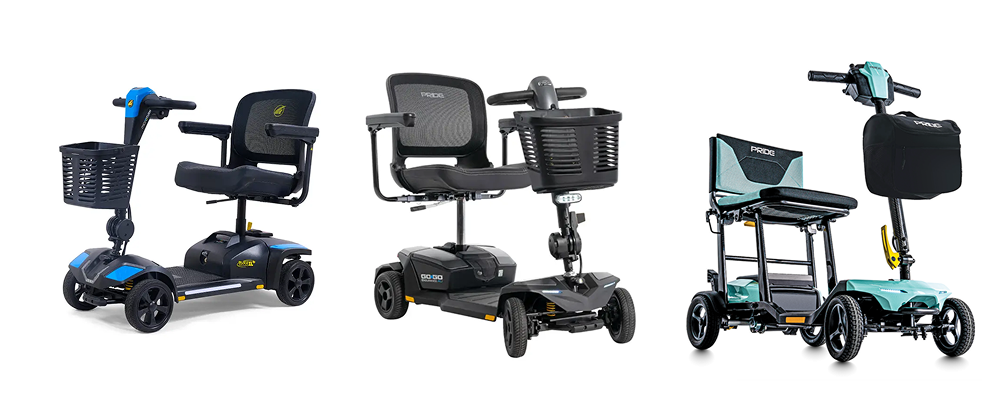
The Main Types of Mobility Scooters
- Portable Scooters are lightweight and are easy to carry
- 3-Wheel Scooters are ideal for turning indoors in compact spaces
- 4-Wheel Scooters offer the best stability when traveling outdoors
- Full-size Scooters are perfect for comfortable regular use
- Folding Scooters can collapse immediately and are ideal for storage or travel
- All-Terrain Scooters handle both rough and uneven ground
- Recreational Scooters are ideal for extended outdoor rides
- Heavy Duty Scooters can support higher weight capacities, ideal for bariatric patients
Each type of mobility scooter we’ve listed fits a different type of day. So the ideal place to start is thinking about how and where you’ll use yours most.
Why Real-World Range Often Falls Short of the Label
According to the data shared by the University of California’s Disability Statistics Center, on average 1.7 million Americans rely on a wheelchair or a mobility scooter. For those individuals, understanding a scooter's real range matters as much as the number printed on the box.
Every mobility scooter has a range that the manufacturer lists. That number gets tested under near-perfect conditions. Flat ground, calm weather, a lighter rider, and a brand-new battery all help you go farther.
Scooters made in the United States are tested under RESNA and ANSI standards. This covers aspects such as battery performance and how much power a scooter uses at different speeds. Such tests give a fair baseline. However, your own rides at home hardly match a lab.
A couple of things that determine the real-world range include:
- Body weight of a user and any additional load
- Hills, grass, or gravel instead of flat pavement
- How fast you like to ride
- The age of the battery and how long it holds a charge
- Cold weather that drains batteries faster
Together, these factors explain why two people with the same scooter can end up with very different outcomes, and why where you ride matters as much as what’s inside the battery.
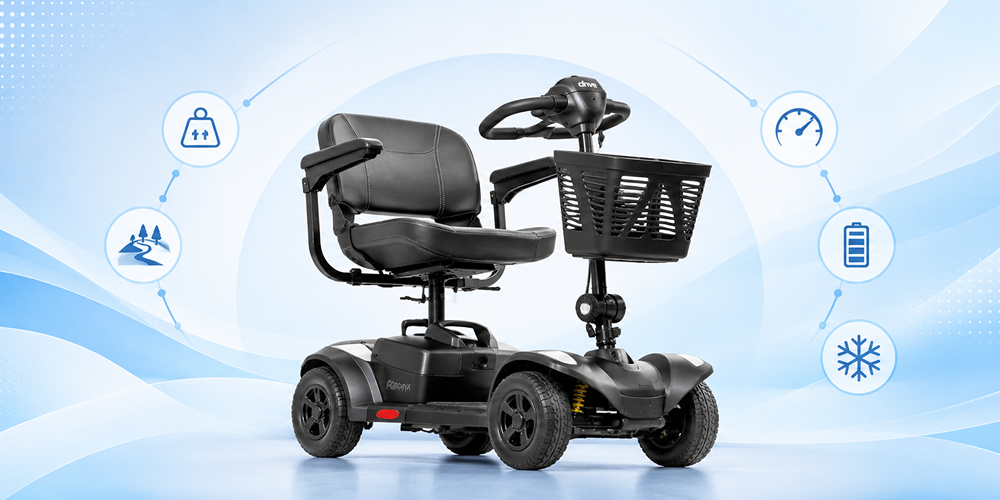
What Actually Determines How Far Your Scooter Will Go
These are the main things that typically decide the number of miles you’ll actually get going before needing a recharge.
Battery Type
Most scooters use either sealed lead-acid batteries or lithium batteries. Lithium-ion batteries are lighter, charge faster, and also hold their range longer.
What Each Battery Type Offers
- Upfront costs of lead batteries are lower
- Overall weight of lithium batteries is less
- Lithium batteries need less time to charge
The battery you start with impacts almost everything else about how your overall scooter feels to use.
Battery Capacity
Battery capacity gets measured in amp-hours. Battery capacity is commonly expressed in amp-hours (Ah). A higher Ah rating generally indicates greater energy storage when comparing batteries of the same voltage, but it doesn't determine travel range on its own.
How Capacity Affects Your Ride
- Higher Ah ratings mean longer range
- Larger batteries add some additional weight
- Capacity starts fading slowly as batteries start to age
It’s important to check the amp-hour rating before investing in a scooter, as it gives you a better idea of real range than the headline number.
Rider Weight and Cargo
Heavier loads make the motor work harder, and the battery drains faster. This includes your overall body weight and anything that you carry or tow.
What Adds to the Load
- Your own body weight
- Baskets, bags, or oxygen tanks
- Groceries or shopping bags
Several manufacturers test the range with a lighter rider. So expect a shorter distance if you weigh more.
Terrain and Riding Conditions
Flat, smooth pavement is the easiest surface for any scooter. Grass, hills, gravel, and uneven sidewalks consume more power and reduce the overall range.
Surfaces that Use More Battery
- Hills or sloped driveways
- Dirt or grass paths
- Loose stone or gravel
- Wet or muddy ground
If your regular routes include most of these surfaces, plan for a shorter range than what’s mentioned in the box.
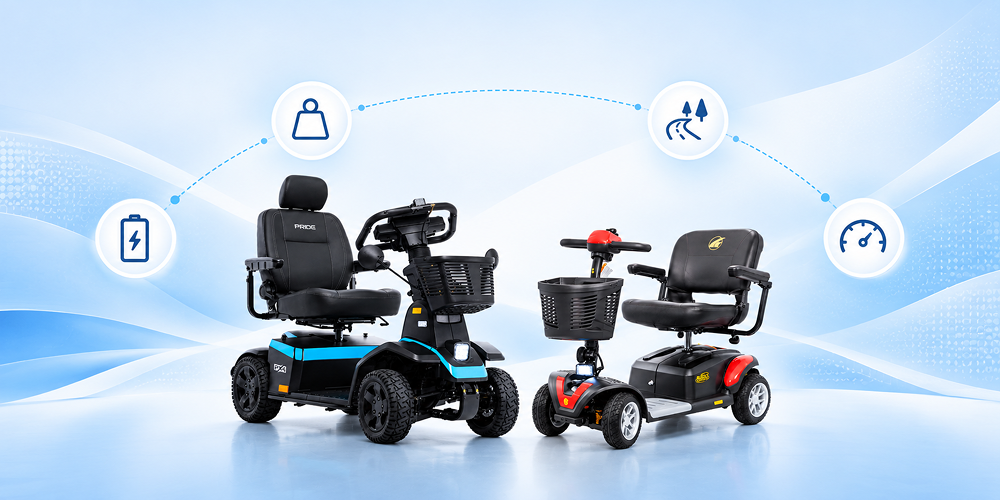
Speed and Riding Habits
Riding at top speed uses more energy than a slower, steadier pace. Frequent starting and stopping also uses more power than one smooth, continuous ride.
Habits that Stretch Your Range
- Riding at a moderate, steady speed
- Avoiding constant starts and stops
- Planning routes without extra backtracking
Small changes in how you ride can add real miles to your trip without changing anything about the scooter itself.
Scooter Class and Size
Smaller travel scooters are built to be light and easy to transport, which usually means a smaller battery and shorter range. Larger, heavy-duty scooters carry bigger batteries built for longer outdoor trips.
How Scooter Size Affects Range
- Travel scooters average shorter distances
- Mid-size scooters balance range and portability
- Heavy-duty scooters carry the largest batteries
- Bigger scooters weigh more to transport
The size and class of scooter you pick often matters more than anything printed on the box.
Battery Age and Maintenance
Every battery loses some capacity over time, even with good care. Battery capacity gradually decreases with age and use, so an older battery may not provide the same range it did when new.
Ways to Protect Your Range
- Charge the battery fully after each use
- Avoid letting it sit fully drained
- Store it somewhere dry and mild
- Replace batteries every few years
A few simple habits can keep your scooter's range close to what it was on day one.
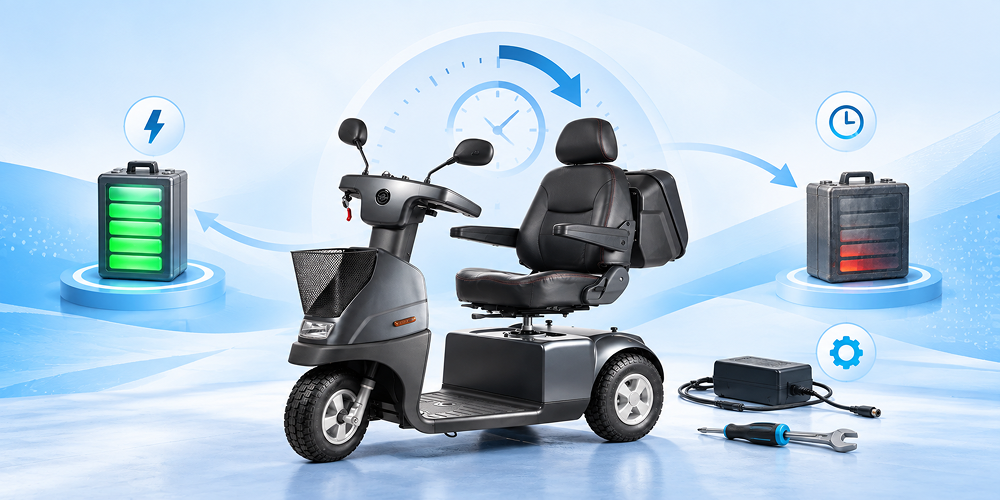
A Scooter Built for Your Daily Range Is Easier to Find at Med Mart
Before choosing a mobility scooter, compare its weight capacity, estimated range, dimensions, turning radius, battery type, and portability with your everyday needs. At Med Mart, clients can take a test ride, check controls, and clear up any concerns before deciding, with complete post-purchase support.
What Makes Buying From Med Mart Different
- Product experts with extensive knowledge of battery specs
- Real showrooms where users can have a test ride on scooters
- A massive array of over five thousand products
- Repair support if something needs to get fixed later
Contact us today to find a scooter that actually fits how you plan to use it every day.
Final Thoughts
Almost every rider's daily routine is different. So no single scooter can meet everyone’s needs. Some people might need a lightweight scooter for short trips around town, while others may need a steadier build for longer outdoor rides.
So, if you’re investing in a scooter for yourself or helping a senior, then ensure you consider the distance it covers, the riding surfaces, and how frequently there will be access to charging. Consider needs beyond the manufacturer’s range, including battery specs, weight capacity, and use, to choose a scooter that fits your daily needs.
Frequently Asked Questions
1. How long does it take to charge a mobility scooter battery fully?
Charging time varies by scooter, battery type, battery capacity, and charger. Many mobility scooter batteries require several hours to fully recharge. Check your owner's manual for the recommended charging time and charging procedure.
2. Can I change the battery of my scooter?
Many batteries are simple enough to replace at home without tools. Check your owner’s manual first, as some warranties require a pro to handle the replacement.
3. Is it bad to let a mobility scooter battery run all the way down?
Regularly allowing a mobility scooter battery to become fully discharged may shorten battery life, depending on the battery type. Follow the manufacturer's charging instructions and avoid leaving a discharged battery unused for extended periods.
4. How will I know when a mobility scooter battery needs replacing?
Other signs include reduced speed, difficulty on low inclines, and problems with charge maintenance overnight. If you notice multiple symptoms at once, have the battery checked.
5. Does cold weather reduce mobility scooter range?
Yes, low temperatures slow the chemical reaction inside batteries, reducing the power they can deliver. The effect is more pronounced in cold weather or when the scooter is kept in an unheated garage.