


Sometimes walking just isn’t as safe or manageable as it used to be. Maybe you’re recovering from surgery, dealing with a health condition, or helping a loved one who gets tired after walking short distances. Whatever the reason, having the right wheelchair can make everyday outings a whole lot easier.
Two of the most common choices are manual wheelchairs and transport chairs. They can look pretty similar at first, but they’re meant for different situations. A manual wheelchair may allow the person using it to move around on their own, while a transport chair is generally designed for someone else to push.
If you’re trying to choose between the two, don’t get too hung up on which one looks better on paper. Think about what a normal day is actually going to look like. Will the chair mostly be used for doctor’s appointments? Will the person spend several hours in it? Does the user want to move independently? And, maybe just as important, who’s going to be lifting the chair in and out of the car?
At Med Mart, we carry a wide range of wheelchairs and mobility products, and our team can help compare things like chair size, frame weight, seating options, portability, and how the chair will really be used day to day.
Wheelchair Types and How Each One Supports Daily Life
Wheelchairs come in all kinds of styles, and there’s a reason for that. Someone who only needs help getting through an airport has very different needs from someone who uses a wheelchair throughout the day.
Here are some of the main types you’ll come across:
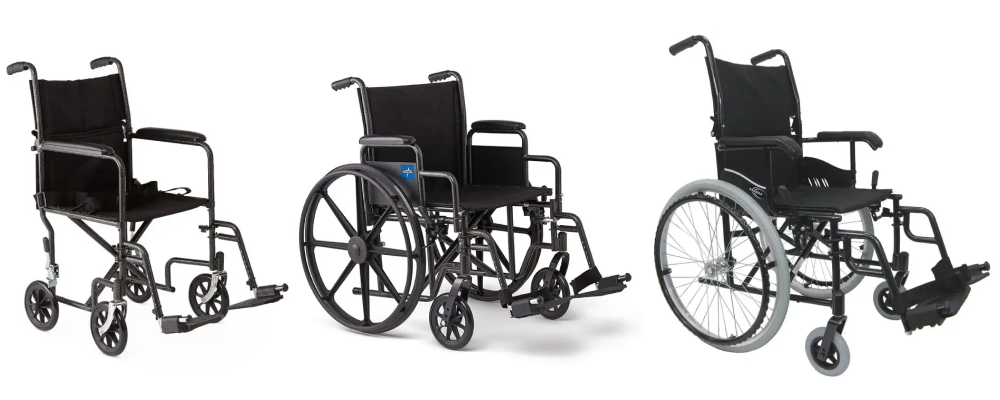
- Transport wheelchairs are usually lightweight and have smaller wheels. They’re designed to be pushed by another person and work well for appointments, shopping, travel, and shorter outings.
- Standard wheelchairs are sturdier chairs that can work well for regular mobility at home or out in the community.
- Lightweight wheelchairs have lighter frames, which can make them easier to propel, fold, lift, and transport.
- Heavy-duty wheelchairs usually offer reinforced frames, wider seating, and higher weight capacities.
- Tilt-in space wheelchairs tilt the seat and back together, giving the user another way to change position while staying supported.
- Reclining wheelchairs allow the backrest to recline so the user can rest or change position.
- Ultra-lightweight wheelchairs use very light frames and may be a good option for people who propel their own chair often.
- Standing wheelchairs allow some users to move into a standing position for access, positioning, or other daily activities.
- Shower wheelchairs are designed for wet environments and typically use materials that hold up better around water.
- Pool & beach wheelchairs are made for surfaces like sand, pools, and shallow water that a traditional wheelchair may not handle well.
- Handcycles are adaptive cycles powered by the arms and can be used for recreation, exercise, or transportation depending on the model.
While the market is flooded with so many options, both manual and electric models remain in strong, consistent demand. According to Fortune Business Insights, manual wheelchairs hold a 50.56% share of the global wheelchair market, worth around $6.11 billion.
Understanding Manual Wheelchairs and Transport Chairs
The easiest way to understand the difference between the two is to picture someone actually using one.
One gives the user the option to move the chair themselves. The other is really built around having another person there to push.
Manual Wheelchair Overview
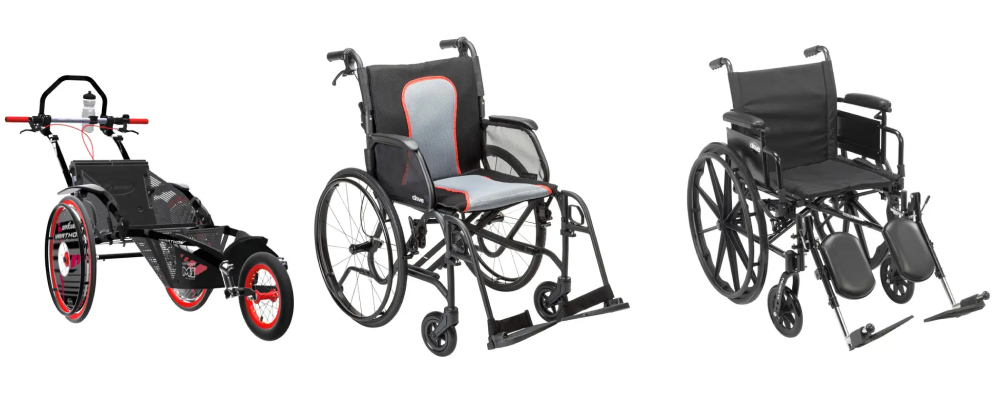
A manual wheelchair usually has two large rear wheels with hand rims. If the user has the strength and ability to self-propel, they can use those wheels to push and steer the chair themselves.
There are still handles on the back, so a caregiver or companion can step in when needed. That’s helpful if the user gets tired, runs into a difficult surface, or simply wants a break.
Transport Chair Overview
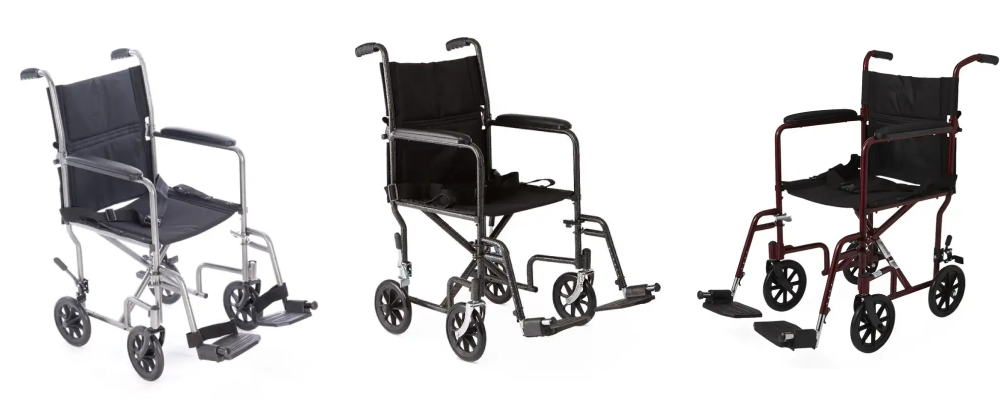
A transport chair typically has four smaller wheels and doesn’t have the large hand rims you’d use to self-propel.
So yes, someone else generally needs to push it. The tradeoff is that transport chairs are often lighter, easier to fold, and less of a hassle to lift into the back of a car.
If the chair is mostly going to appointments, restaurants, family gatherings, or on trips with someone there to help, that lighter frame can be really convenient.
Manual Wheelchair vs Transport Chair at a Glance
| Feature | Manual Wheelchair | Transport Chair |
|---|---|---|
| Who propels it? | User or caregiver | Caregiver or companion |
| Rear wheels | Large | Small |
| Self-propelling | Possible for appropriate users | Generally not |
| Weight | Usually heavier | Usually lighter |
| Best suited for | Regular or daily mobility | Short outings and transportation |
| Seating options | More options available | Usually more limited |
| Portability | Varies by model | Generally more portable |
| Caregiver required | Not always | Generally yes |
Key Factors for Comparing Manual Wheelchairs and Transport Chairs
Most of the decision comes down to four things: independence, portability, comfort, and how long the person expects to sit in the chair.
Who Controls the Movement
Manual Wheelchair
A manual wheelchair gives an appropriate user the option to move the chair using the large rear wheels. If they have enough upper-body strength and coordination, they’re not always waiting for someone else to get them from one place to another.
That doesn’t mean they have to do all the work themselves. A caregiver can still push the chair from behind when needed.
Key Features
- Large rear wheels with hand rims
- Push handles for caregiver assistance
- Wheel locks to help keep the chair stationary while parked or during transfers
Best for: Someone who may be able to propel the chair independently but still wants the option of having someone help.
Transport Chair
A transport chair is meant to be pushed by someone else. The smaller wheels help keep the frame lighter and more compact, which is a big part of the appeal.
You’ll see these used a lot for appointments, shopping, family visits, and travel. If someone’s going to be with the user anyway, a transport chair can be a really practical option.
Key Features
- Smaller wheels that help keep the chair lightweight
- Push handles for the caregiver or companion
- Many models have caregiver-operated hand brakes
- Some models include a positioning belt or seat belt
Best for: Someone who’ll usually have a caregiver, friend, or family member available to push the chair.
Weight, Folding, and Travel
This is one of those things that can sound minor until you’re the person loading the chair into a car several times a week.
Manual Wheelchair
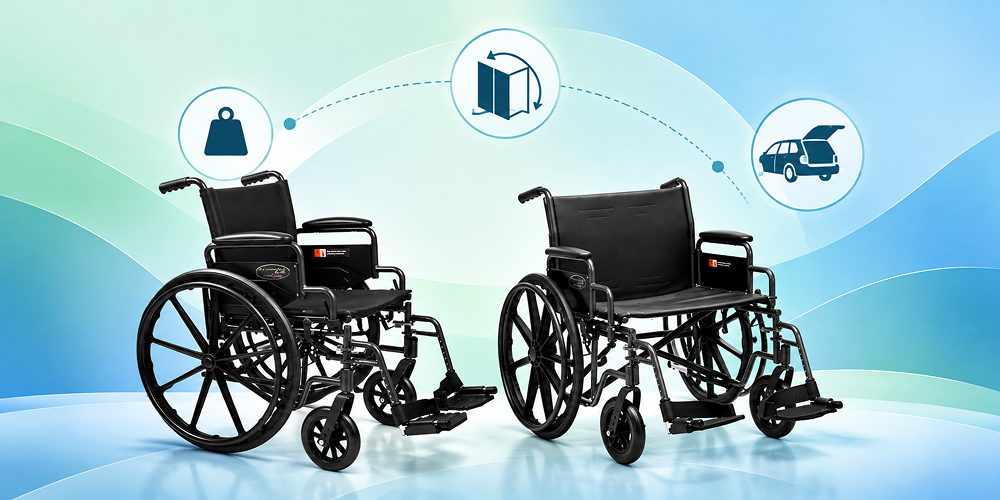
Manual wheelchairs are generally sturdier and heavier than transport chairs. Some models have removable or quick-release rear wheels, which can make loading the frame into a vehicle easier.
Weight varies quite a bit from model to model, so it’s worth checking the actual specifications instead of assuming every manual wheelchair is going to be heavy.
Features that support their mobility independence
- Standard models may weigh around 30 to 40 pounds
- Some offer removable or quick-release rear wheels
- Lightweight and ultra-lightweight models can cut down on how much you have to lift
Best for: Someone who uses the chair regularly and values the option to move independently, even if the frame is a little heavier.
Transport Chair
Transport chairs are usually more straightforward. You’ll often get a padded seat and back along with swing-away or removable footrests, but there generally aren’t as many ways to customize the seating.
And honestly, that may be just fine.
If the chair is mainly being used for a trip to the doctor, lunch with family, or a couple of hours out shopping, you may not need all of those extra adjustments.
Features that support portability
- Padded seat and back
- Swing-away or removable footrests on many models
- Fewer adjustments than most full manual wheelchairs
Best for: Shorter outings and occasional transportation when someone is available to push the chair.
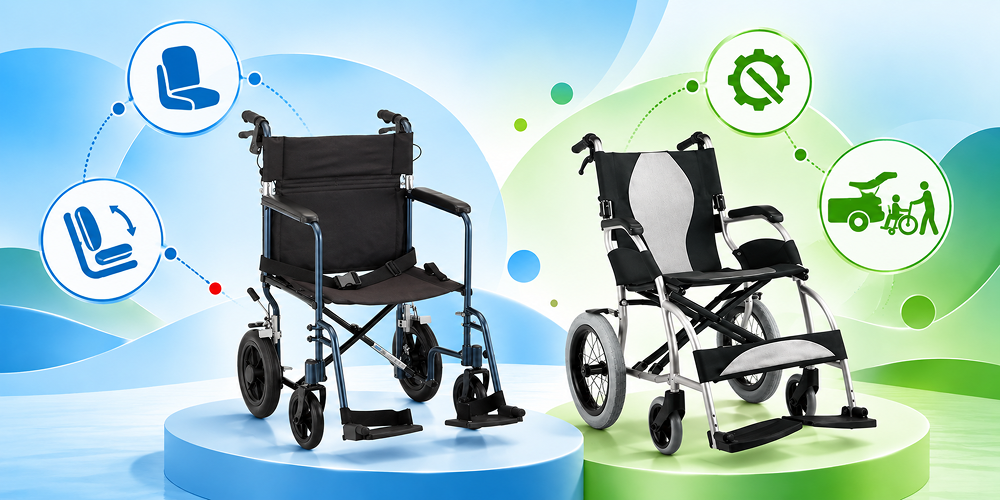
Picking the Chair That Suits Your Day
Choosing between the two usually gets easier once you stop thinking about the chairs and start thinking about the day.
A Manual Wheelchair Works Best When
- The user has the ability and strength to self-propel
- The chair may be used for several hours at a time
- Seat fit, cushions, and adjustments are important
- The user wants more control over where and when they move
- The chair will be used regularly rather than just once in a while
A Transport Chair Works Best When
- Someone else will usually be available to push
- The chair is mainly needed for appointments, errands, or visits
- A lightweight frame matters
- The chair needs to fold easily for storage or travel
- The user doesn’t need or isn’t able to propel the chair independently
And sometimes the answer is both.
Some families keep a manual wheelchair for regular mobility and a transport chair for doctor’s appointments, travel, or those days when something lighter is simply easier to deal with.
Finding the Right Fit Takes a Little Time
Choosing a wheelchair usually isn’t as simple as picking one that looks about right online.
Think about the person using it, but also think about whoever may be helping with it. Where will the chair be used? How often does it need to go in the car? How long will the person normally sit in it? Does independent mobility matter?
A chair that’s perfect for a quick doctor’s appointment may not make much sense for someone sitting in it for six hours a day. On the other hand, a heavier manual wheelchair with lots of adjustments may be more than someone needs for the occasional family outing.
Take a few minutes to check the practical stuff. Measure the tight doorways in the house. Look at the chair’s overall width, not just the seat width. Check the actual weight of the chair and think about who’ll be lifting it.
Those details can save you a lot of frustration later.
At Med Mart, our product specialists can help walk you through the differences and narrow down the options based on how the chair will actually be used. Many of our wheelchairs are also HSA- and FSA-eligible, and we offer free lifetime technical support after purchase.
Contact us today and let our team help you find the best fit.
Frequently Asked Questions
1. Will Medicare pay for a manual wheelchair or a transport chair?
Medicare Part B may cover certain manual wheelchairs and transport chairs when Medicare’s medical-necessity and coverage requirements are met.
Coverage generally depends on whether the chair is medically necessary for mobility-related activities inside the home, along with other eligibility and documentation requirements. The specific chair also has to meet Medicare’s coverage criteria.
If you’re hoping to use Medicare, it’s a good idea to check eligibility before purchasing and work with a Medicare-enrolled supplier.
2. How do I measure for the right seat width?
A common starting point is to measure across the widest part of the hips or thighs while seated and allow a little extra room for comfort and clothing.
But don’t stop at seat width. Seat depth, overall chair width, and the user’s proportions can all affect how the chair fits. Check the sizing recommendations for the specific wheelchair you’re considering.
3. How often should a wheelchair or transport chair be checked?
Give the chair a quick look on a regular basis, especially if it gets used a lot.
Check the tires, brakes or wheel locks, footrests, armrests, folding points, and hardware. If something suddenly feels loose, wobbly, or just doesn’t work the way it normally does, don’t ignore it.
For the specifics, follow the manufacturer’s maintenance recommendations for that particular chair.
4. Will a wheelchair fit through the doorways in my home?
Make sure you’re comparing the doorway to the wheelchair’s overall width, not just the width of the seat.
Bathroom doors, tight hallway turns, and older doorways are usually the places worth checking first.
And remember, technically fitting through the opening isn’t quite the same as having enough room to maneuver comfortably once you’re through it.
5. Is it better to rent or buy a wheelchair after surgery?
It depends on how long you’re likely to need it.
If you’re only expecting to use a wheelchair for a few weeks, renting may make sense. If recovery will take longer or there’s a chance you’ll continue using the chair afterward, buying may be the more practical option.
Ask your healthcare provider how long they expect you’ll need mobility assistance, then compare the rental and purchase options from there.