


Manual patient lifts play an integral part in the lives of people with limited mobility. Several families depend on these medical devices to help move their loved ones between bed, wheelchair, toilet, recliner, or other seating areas. One of the most beneficial aspects of these lifts is that they do not place excessive strain on either the patient or the caregiver.
However, to experience pain-free transfers, proper use is important. Rushed transfers, incorrect positioning, or equipment issues increase risks of falls, discomfort, or injuries. It is common for caregivers to assume that operating a manual lift is easy. However, every transfer needs attention to safety, preparation, and communication.
Therefore, investing in the right equipment and knowing how to use it safely are most important. This is where mobility equipment providers such as Med Mart step in. These reputable suppliers offer a wide range of patient lifts and other home care accessories to meet diverse needs, body types, and home settings. So it is important to stay aware of a couple of safety practices to ensure safer transfers and a better experience for those involved.
Understanding the Manual Patient Lift
A manual patient lift is a mechanical device built to transfer a person with limited mobility. They differ from electric lifts in that manual versions rely on human-powered cranking or lever mechanisms to raise and lower a patient.
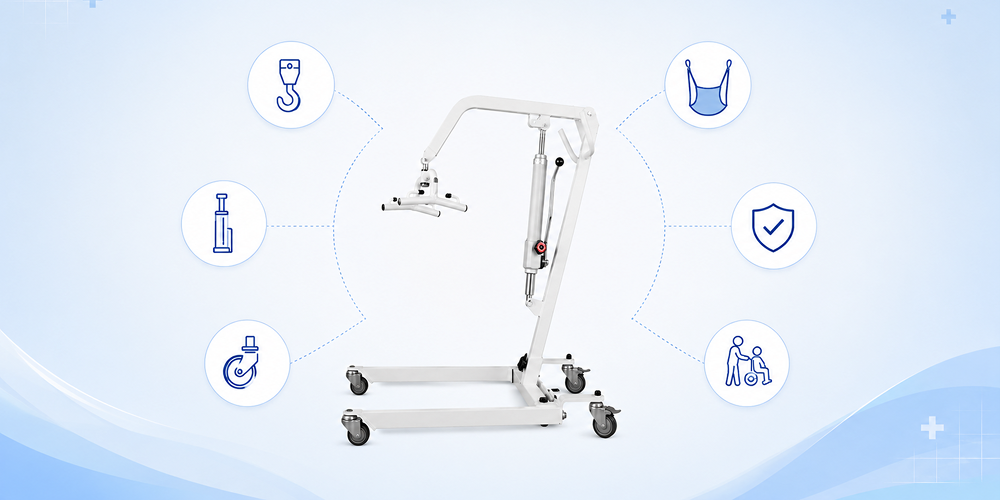
Manual lifts often consist of:
- A base with wheeled or castor legs that spreads outwards for better stability
- A vertical mast and boom are supporting the sling
- A hand crank or hydraulic pump for raising and lowering the boom
- A sling attachment system using loops and hooks
It is important to know how every part operates before using the lift on a person. This lays a strong foundation for safer operation.
It is commonly used for:
- Post-surgery recovery (hip, knee, spinal procedures)
- Stroke recovery
- Elderly care with reduced strength or balance
- Long-term mobility impairments
Ensure to confirm with the patient’s care team that a manual lift is appropriate for the individual’s specific condition, weight, and mobility level before proceeding.
Essential Tips for Manual Patient Lift Use at Home
The following tips cover an entire arc of a safer transfer, right from equipment inspection to patient monitoring:
Inspect the Equipment Before Every Use
A patient lift should always be inspected thoroughly before every transfer. Wear and tear on the sling fabric, mechanical damage, and castor failures might happen between uses without any visible warning signs.
What to Check Each Time
- Sling fabric and stitching condition
- Engagement point of hook, clip, and D-ring
- Castor rolling and locking function
- Crank or hydraulic pump responses
Select and Fit the Right Sling
A sling is only a portion of the system that is in direct contact with the patient. So, making the right selection and fit is integral to every safe transfer.
Common Sling Types
- U-sling is ideal for standard seated transfers
- Full-body sling for limited trunk control
- Toileting sling for every bathroom transfer
An appropriately fitted sling remains below the shoulders, cradles the individual without cutting in, and has seams facing away from the skin.
Prepare the Transfer Environment
It is important to keep a close watch on the space around the lift. Any poorly arranged or cluttered transfer area is a major contributor to accidents during home patient transfers.
Environment Checklist
- Ensure to clear every floor obstacle along the path
- Lock the destination surface before you start
- Confirm proper lighting throughout the space
- Ensure that the flooring is dry and caster-friendly
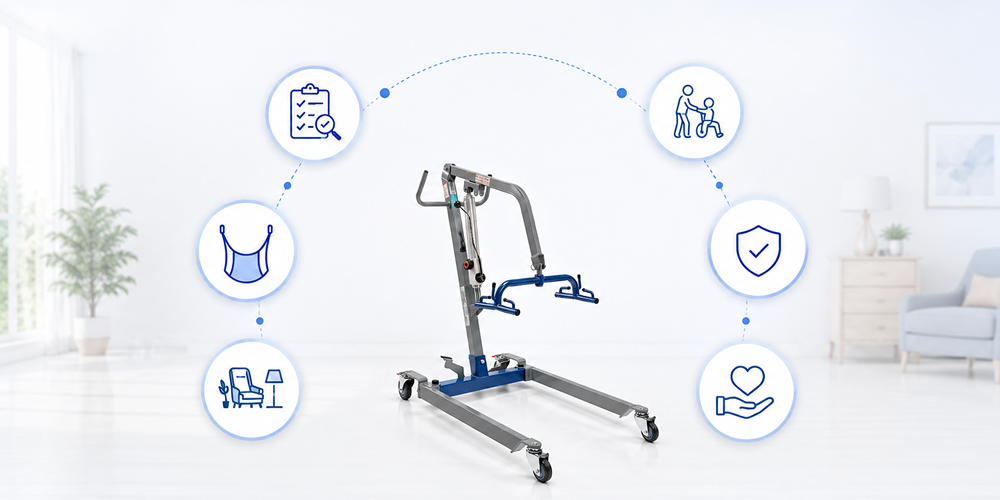
Make sure to position the destination surface for the wheelchair, commode, or chair before initiating the transfer, not during it.
Use Correct Body Mechanics Throughout
A manual lift will reduce physical strain. However, it does not remove it completely. A caregiver’s posture and movement control during a transfer directly impact both their safety and the patient’s stability.
Key Posture Points
- Always keep feet and shoulders a comfortable width apart at all times
- Bend your knees slightly throughout the raise
- Avoid leaning over the lift during transfer
- Communicating each movement to the patient
Ensure to raise the patient slowly, stop after a couple of inches to confirm sling positioning, and then continue with the full transfer.
Monitor Skin and Comfort After Every Transfer
Redness, pressure marks, and soft-tissue irritation often occur due to an incorrect sling fit or prolonged contact. They develop faster than any caregiver would expect.
Post-Transfer Skin Check
- Check for redness on thighs, back, and underarms
- Inspect for indentation marks from leg loops
- Note any complaints of pinching or numbness
- Replace damp or soiled slings immediately
Never leave a patient suspended in the sling unattended, even for a short while. This will restrict circulation and increase the risk of falls.
Top-Rated Manual Patient Lifts Available at Med Mart
At Med Mart, we offer a variety of manual patient lift models. The following top options align with different home care needs and perfect caregiver setups:
Hoyer® Deluxe Hydraulic Patient Lift

Hoyer® Deluxe Hydraulic Patient Lift
The Hoyer® Deluxe Hydraulic Patient Lift is one of the most trusted standards in home patient transfer equipment. These lifts are made to last and are easy to use. They enable safe, controlled transfers across diverse patient needs and home care environments.
Product Highlights
- Steel finish with modern paint
- Pump handle positioned ergonomically
- Can be rotated for use on either side
- U-legs that adjust for toilet use and seating
- Can be disassembled without a tool for compact storage
- 400 lb. weight capacity
Protekt® Onyx Hydraulic Patient Lift

Protekt® Onyx Hydraulic Patient Lift
Our next product is versatile and easy to assemble, making it perfect for caregivers. No-clip spreader bar and easy-access base make the Protekt® Onyx Hydraulic Patient Lift the most practical hydraulic lift choice for the home.
Product Highlights
- It can match with any of the 6-point or 4-point slings
- Slow and steady hydraulic rise and drop
- It is easy to open and lock the hand-operated base
- Two rear locking castors for stable transfer
- Incorporated chain connections
- Assembly requires no clips or tools
Deluxe Hydraulic Patient Lift

The Deluxe Hydraulic Patient Lift provides a heavy-duty hydraulic transfer solution for home care users. The design includes a versatile steel swivel bar with a silver vein design. It is the most reliable solution for patients with all types of transfers.
Product Highlights
- A structure made of steel has silver veins
- Chain link attachment points were included
- High-efficiency pressure control
- 5-inch wheels for smooth floor operation
- Base suited for different environments
The Standard of Care Behind Every Med Mart Product
Modern home healthcare environments rely heavily on the use of reliable equipment, essential for improving patient independence and safety. At Med Mart, we always provide mobility products tailored to the challenges and evolving care needs of caregivers and their families.
Choosing Med Mart means access to:
- A wide selection of clinically appropriate mobility devices
- Expert guidance to help families choose the right mobility equipment
- Local delivery and customer service for home care products
So you're ready to discover the best lift for your home care delivery? Contact us today and let our team help you make an informed decision when choosing the appropriate medical mobility equipment!
Investing in Safe and Reliable Mobility Support
With a well-equipped home, good routines, and good intentions, you can move your patient safely, even with the aid of a routine transfer. The tools and guidance are available, and the standard of care can be provided at home as consistently as in the hospital.
But when it comes to safety, fear isn't the sole concern. It is all about giving the person in your care, or perhaps yourself, the utmost opportunity to wander every day with self-confidence and respect.
Frequently Asked Questions
1. How much space is needed to use a manual patient lift at home?
Most manual patient lifts require enough clearance around beds, chairs, and other furniture to allow safe positioning and movement during transfers.
2. Do first-time users find manual patient lifts tough to use?
Users tend to quickly learn the basic operation with proper guidance from the manufacturer.
3. Can patient lifters be safely used during recovery phases?
Yes, manual patient lifts are commonly used during recovery from surgery or injury when temporary assistance with transfers is needed.