


Patient lift slings help people with mobility challenges move safely during routine transfers. A sling supports the patient’s body while the patient lift raises and carries them, so the person need not stand, pivot, or be manually lifted. This also reduces caregiver strain and lowers fall risk. Transfers happen frequently each day, so the sling must be reliable.
That's why families choose Med Mart Online as a leading medical equipment supplier, offering patient lift slings, mobility aids, and more to support seniors, caregivers, and recovering patients. Choosing the right patient lift sling provides steadier support, positioning, and comfort when transferring between beds, wheelchairs, bathrooms, and recliners.
What Patient Lift Slings Are and Why the Right Fit Matters
A patient lift sling is a fabric seat or harness that supports the body while a lift helps raise and transfer a person with mobility challenges. The sling attaches to the lift with loops or straps, so no one has to lift manually.
Well-fitted slings offer several benefits during patient transfers:
- Offers steadier support to the head, back, and hips
- Keeps the body steady while it moves
- Even distribution of weight to safeguard skin
- Reduces physical strain upon caregivers
- Can help a person feel calm and safe
Choosing the right sling relies on the individual’s mobility level, physical condition, and regular care needs. Someone who can bear some weight may need a different sling from someone who requires full-body support. So the sling should match the patient lifts already in the home.
Patient lift slings come in different styles, each designed for particular transfer needs.
A recent study published in Frontiers in Public Health reported that fall-related injuries have caused around 41,241 deaths among adults aged 65 and older in the U.S., while fall deaths have risen steadily since 1999. A well-fitted sling used with a patient lift can keep the body supported during transfers. So, choosing the right sling is one of the best steps you can take for safety and comfort.
Key Factors to Evaluate Before Selecting a Patient Lift Sling
Now let’s focus on a couple of factors that affect how safe and comfortable a transfer feels. So review them all before making a buying decision.
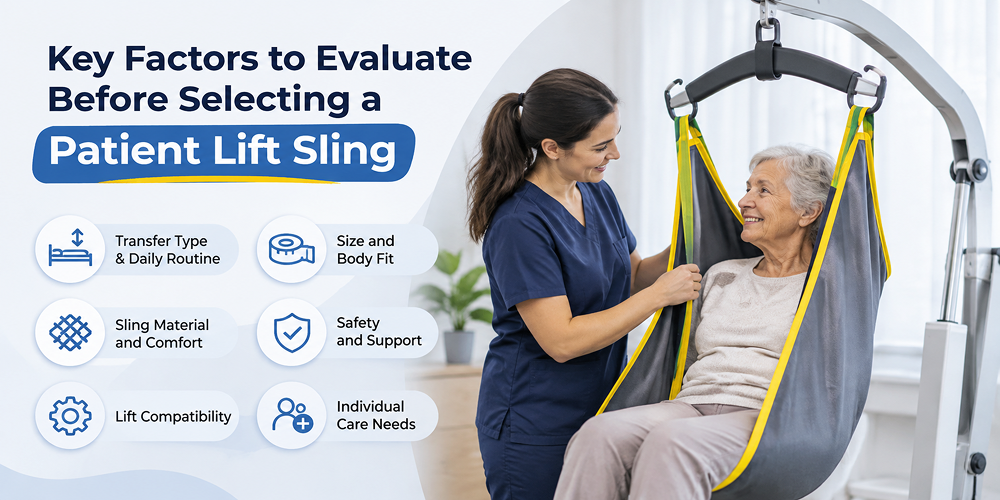
Transfer Type and Daily Routine
Patient lift slings are designed for different transfer needs, such as moving between a bed and wheelchair, assisting with toileting, or supporting sit-to-stand movements. Choose a sling based on the person's mobility, level of support required, and the type of lift being used.
A few things to review across everyday situations are:
- Transfers from bed to chair
- Use of toilet and commode
- Bathing and shower seat moves
- Standing up from sitting position
An electric patient lift may be a suitable option for frequent transfers because its motor raises and lowers the person with minimal manual pumping. The right choice depends on the person's care needs, the caregiver's abilities, and the available space.
Size and Body Fit
A sling that’s too large lets the body move, while one that’s too small presses into a person’s skin. Compare weight, height, and body shape with the size chart before ordering.
Gather all these measurements before making a size comparison:
- The person's current weight
- Hip and thigh measurements
- Height, if required by the manufacturer's sizing chart
- Seated measurements, where applicable
Always compare all measurements with the manufacturer’s size chart. If the measurements fall between two sizes, consult the manufacturer or a qualified equipment specialist before ordering.
Weight Capacity and Safe Limits
Almost every sling lists the maximum weight it can hold, and this number appears clearly on the label and the product page. Select a sling rated above the person's current body weight to stay safe.
There are different details affecting the safe weight limit, such as:
- Ratings of the manufacturer’s stated weight
- Weight limit of a patient lift
- Stitching and strap strength
- Age and wear of the fabric of the sling
When you decide to buy a patient lift, always check the sling rating. The overall setup must stay within the weight capacity of its lowest-rated component. A lift with a higher weight capacity does not increase the capacity of a sling with a lower rating.
Fabric, Padding, and Skin Comfort
Padded slings may offer additional comfort, depending on the person's needs and the sling design. Mesh fabric can also dry quickly after bathing. Fabric texture and seam placement can affect comfort, particularly for people with fragile or sensitive skin.
Compare the sling’s fabric that will be used:
- Softer padding for prolonged use
- Quick-drying mesh for bathing and showering
- Smooth seams and edges to reduce friction
- Fabric that can be cleaned easily
Lift Compatibility and Attachment Points
Sling will connect to a lift with loops, clips, or hooks. The connection should also match accurately. Also check the lift's hanger bar or cradle, which should match the sling's attachment style, and read the product page carefully.
Confirm every compatibility detail before you place an order, such as:
- Four or six attachment points
- The style of the loop or clip
- Cradle shape or hanger bar
- Brand and the model of the patient lift
Different patient lifts may use different spreader bars, cradles, and attachment systems. Always confirm that the sling is approved for your exact lift model.
Reliable Patient Lift Sling at Med Mart Designed for Safe Transfers
We offer various types of patient lift slings that support toileting, standing, and bathing transfers, so you can match each description to the routine you use most often. Sling size and weight ratings vary, so always check the product page before ordering.
Molift RgoSling Toilet LowBack Sling
The Molift RgoSling Toilet LowBack Sling has a larger leg opening for easier access during toileting. It features flexible leg support for a custom fit and double belt buckles for added safety.
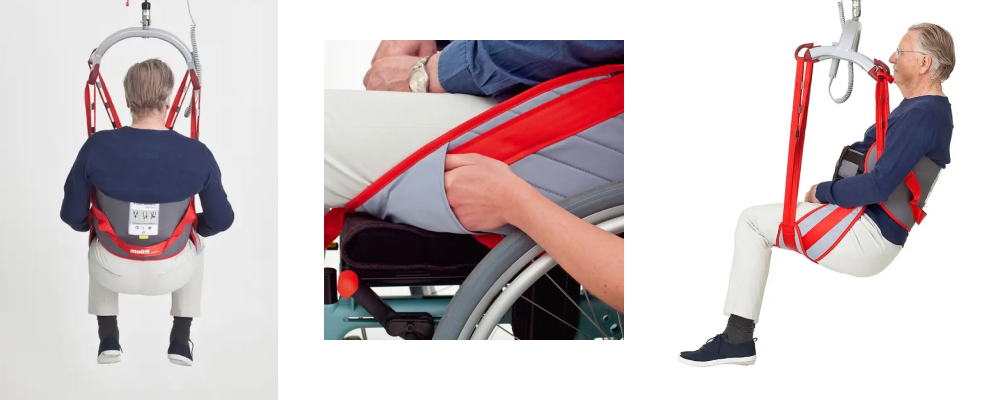
Molift RgoSling Toilet LowBack Sling
Product Highlights
- Larger leg openings for the ease of toileting
- Ease of applying and removing
- Double-belt buckles for safety
- Flip-up labeling system
- Application pockets
- Color-coded hoisting loops
- Flexible leg support designed to accommodate different body shapes
Molift RgoSling HighBack Net Sling
The Molift RgoSling HighBack Net Sling offers multiple features built with soft mesh polyester that breathes well and dries immediately. It is ideal for showering and bathing in homes and other care settings.
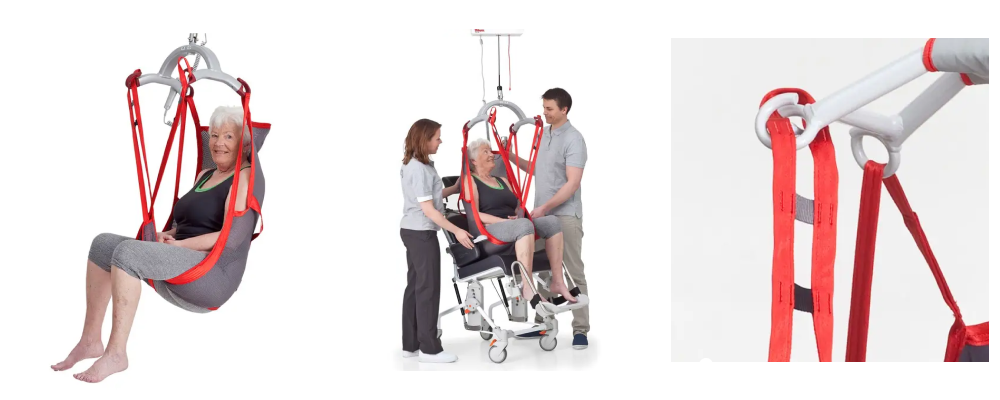
Molift RgoSling HighBack Net Sling
Product Highlights
- Soft and breathable net mesh
- Dries almost immediately
- Well-suited for showering and bathing
- Sliding pockets and loops
- Leg straps that can spread weight evenly
Universal Solid Sit-to-Stand Sling
The Universal Solid Sit-to-Stand Sling is the most comfortable, durable sling ideal for sit-to-stand transfers. It offers lumbar and under-arm support with three loop options that attach to a stand assist lift.
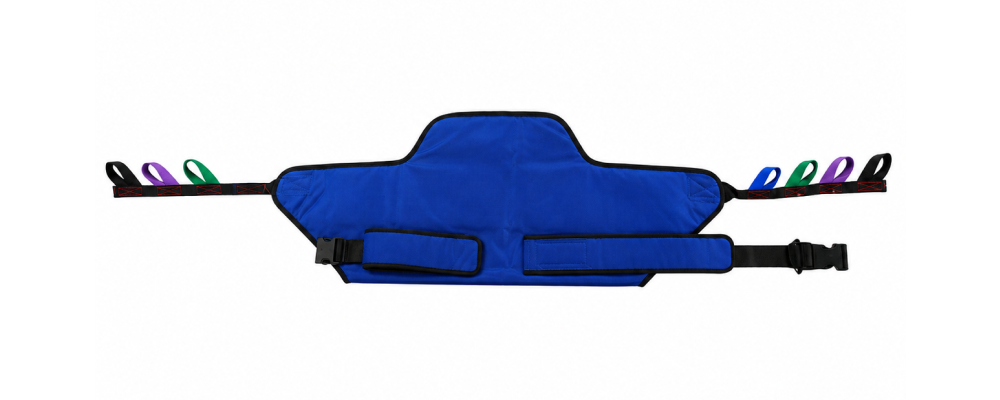
Universal Solid Sit-to-Stand Sling
Product Highlights
- Higher weight capacity
- Lumbar and under-arm support
- Three attachment loop options
- Fits partially for patients with limited mobility
- Stress-tested safety design
- Optional buttock straps
Universal Padded U-Sling with Head Support
The Universal Padded U-Sling with Head Support is built from polyester with deluxe padding for better comfort. A six-point connection keeps it secure, and the built-in head support adds comfort during lifting.
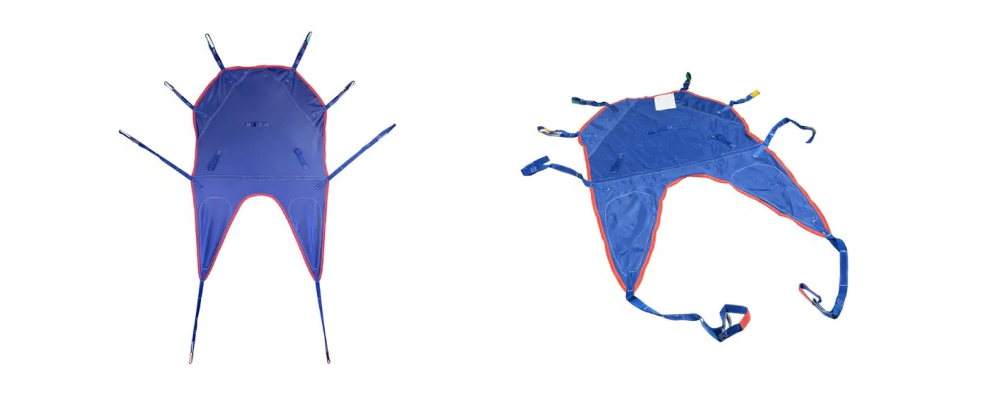
Universal Padded U-Sling with Head Support
Product Highlights
- Built with polyester material
- Better comfort due to deluxe padding
- Six-point connection for improved safety
- Built-in head support
Hoyer Professional Full Back Mesh Sling
The Hoyer Professional Full Back Mesh Sling is made with durable polyester and mesh, making it ideal for bathing. It’s easier to clean and is chain-free.

Hoyer Professional Full Back Mesh Sling
Product Highlights
- Durable polyester and mesh material
- Ideal for showering and bathing
- Easier to clean
- Chain-free design
- Fits both 4-point and 6-point cradles
Find the Right Sling With Med Mart's Product Specialists
Matching a sling to the right person and the right lift takes careful thought, and no one should have to work it out alone. Med Mart offers patient lift slings and mobility equipment for different transfer needs. Our product specialists can answer questions about product features, sizing, weight capacities, and lift compatibility.
We answer questions about sizing, fabric, weight limits, and lift compatibility, which is especially helpful for families who are new to lifts and slings. A short conversation can prevent a wrong size or a poor match. Explore the Med Mart collection online or contact our team for friendly, personalized assistance.
Frequently Asked Questions
1. How Do I Know Which Sling Size I Need?
Check the person's weight and measurements against the manufacturer's sizing chart. The required measurements vary by sling design. If the person falls between sizes or has specific positioning needs, consult a qualified healthcare professional or equipment specialist.
2. Do Electric and Manual Lifts Use the Same Slings?
Not always. Attachment styles vary, so check compatibility with your exact lift model and confirm the sling model with our team before you order anything.
3. Can a Sling Stay Under Someone Sitting in a Chair?
Some slings are designed to remain under a person while seated, while others should be removed after the transfer. Leaving an unsuitable sling in place may cause discomfort or put pressure on the skin. Always follow the manufacturer's instructions.
4. How Often Should a Patient Lift Sling Be Replaced?
Replace it when you see fraying, thin spots, torn stitching, or faded labels. Check the maker's care guide, and retire any sling that looks damaged.
5. How Do I Wash a Patient Lift Sling?
Follow the sling's care label and manufacturer instructions, as washing temperatures, detergents, and drying methods vary. Avoid cleaning methods that may weaken the fabric, stitching, or straps. Make sure the sling is completely dry before using it again, if required by the manufacturer's instructions.