


We understand that caregiving is a complex job that can present not only emotional challenges but also physical demands. Caregiving responsibilities revolve around lifting, repositioning, and transferring patients. Such repetitive tasks impact the caregiver’s body, which can lead to back injuries.
Back injuries are one of the most common occupational hazards for caregivers. Med Mart carries solutions to help prevent injuries. Our expert representatives listen to your specific situation and needs and will help find equipment to make staying at home easier and more comfortable for the caregiver and patient.
Electric patient lifts are a great option for individuals who need assistance with transfers. An electric patient lift offers peace of mind and confidence during transfers, helping to prevent back injuries for caregivers.
The Hidden Risk: Why Caregivers Are So Prone to Back Injuries
The tasks that caregivers perform almost regularly are:
- Patient transfers from bed to wheelchair
- Repositioning of patients in bed
- Helping with bathing or toileting
- Preventing risks of slips and falls
- Support patients during physical or mobility activities
Repetitive movements such as twisting, bending, or lifting can lead to the following over time:
- Strain on muscles
- Herniated discs
- Chronic lower back pain
- Sciatica
- Shoulder and neck injuries
- Pressure on the spine
What are Patient Lifts?
Patient lifts are categories of mobility devices designed for seniors, patients, and people with limited mobility. These devices make transfers easier. The main benefit for caregivers is reduced physical strain, especially in their backs. It also improves patient safety and comfort.
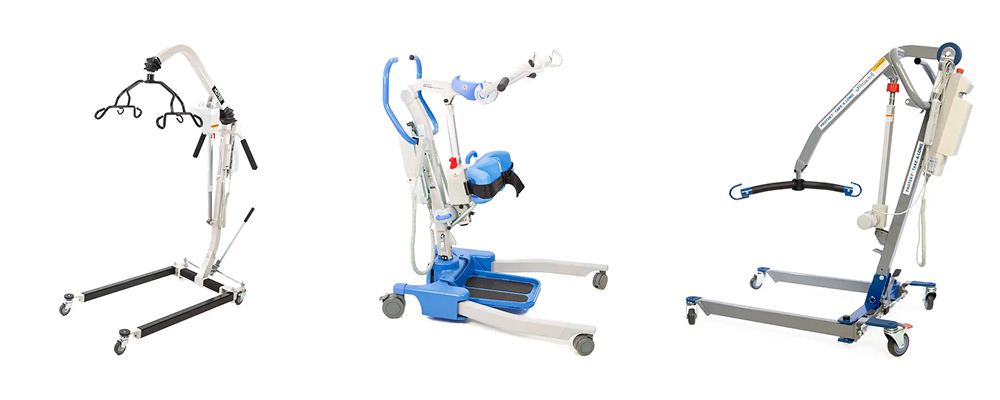
Different types of patient lifts available:
- Electric patient lifts
- Manual patient lifts
- Sit-to-stand patient lifts
- Heavy-duty patient lifts
- Folding patient lifts
- Specialty patient lifts
Patient lifts play an integral role in supporting modern caregiving. Therefore, having a clear idea of the difference between electric and manual patient lifts, along with the other types, can help caregivers choose a device. This mobility equipment aligns with physical demands, supports transfer frequencies, and promotes long-term injury prevention.
What is an Electric Patient Lift?
An electric patient lift works as a transfer device powered by a motor that helps to raise, lower, or move people with mobility restrictions safely. It comes with battery-powered controls and sling systems. This reduces physical efforts besides ensuring seamless, controlled patient handling during transfers.
Powered lifts
Powered lifts work on electric motors to help with adjusting the base and lifting purposes. They offer consistency in performance, effortless lifting, and less use of physical effort, benefiting caregivers during patient transfers.
Portable/Folding
Portable or folding electric lifts offer better convenience of transport and storage. Lightweight and compact frames make them best for travel, at-home care, and smaller clinical units.
Bariatric Patient Lift
Bariatric electric lifts are designed to bear heavier weights. Stronger actuators, reinforced frames, and wide bases ensure safer transfers for bariatric patients.
Lift-from-floor
Floor-to-lift electric lifts enable caregivers to pick up patients safely from the floor. Low base and extended reach clears the ground, making recovery controlled and safe.
How Electric Lifts Reduce Caregiver Back Strain
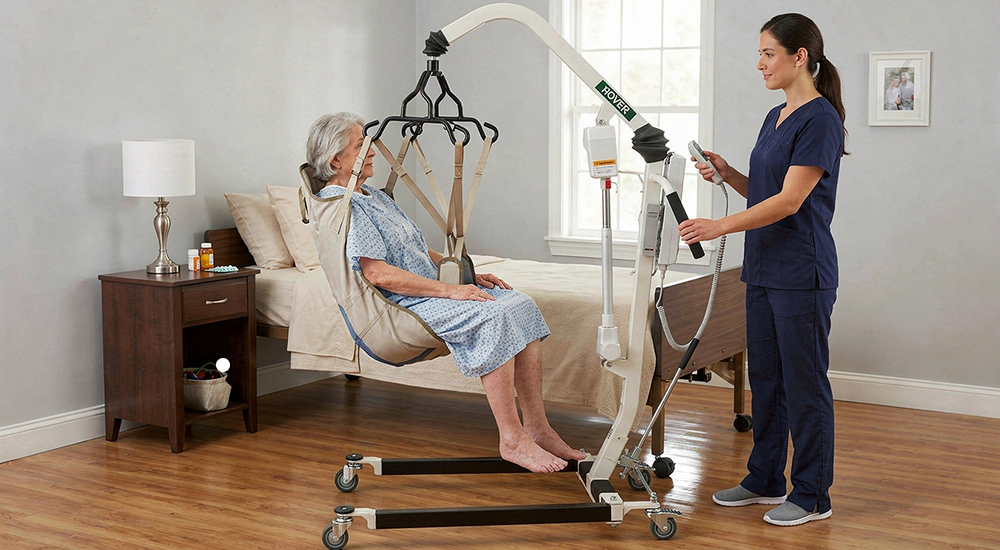
Eliminates Heavy Manual Lifting
Electric lifts can help remove the manual need to support the full body weight of a patient. Motorized lifting can help caregivers stay in their upright positions during transfers.
The main elements of protection include:
- Powered weight support
- Smooth vertical motion
- Stable sling positioning
- Reduced spinal load
This way, caregivers experience less back strain when no manual lifting is involved.
Prevents Awkward Twisting Movements
Transfers mainly involve constant turning and repositioning of the patient in a limited space. Electric lifts enable repositioning without any serious bending or twisting involved.
The main elements of protection are:
- Supporting upright posture
- Controlled lateral movement
- Adjustable base width
- Stable patient alignment
The right type of positioning will help prevent sudden spine compression during patient shifts.
Provides Controlled Transfers
Electric lifts offer stability throughout the process of transferring patients, eliminating any jerky movements during the transitions.
It includes:
- Secure sling attachment
- Even weight distribution
- Smooth start-stop motion
- Emergency stop control
Proper inspection and maintenance of electric lifts for safety ensures reliable performance. This way, it safeguards patients during transfers, preventing any unexpected equipment breakdown.
Reliable Electric Lifts Available at Med Mart
Med Mart offers a wide range of electric patient lifts designed to protect caregivers while supporting patient comfort. These models address different care environments, weight capacities, and transfer needs.
Hoyer® Advance-E 340 Folding Patient Lift
The Hoyer® Advance-E 340 Folding Patient Lift offers a powered lifting mechanism in an aluminum lightweight frame. They are designed for ease of storage and transport, offering a smooth transfer for patients at home.
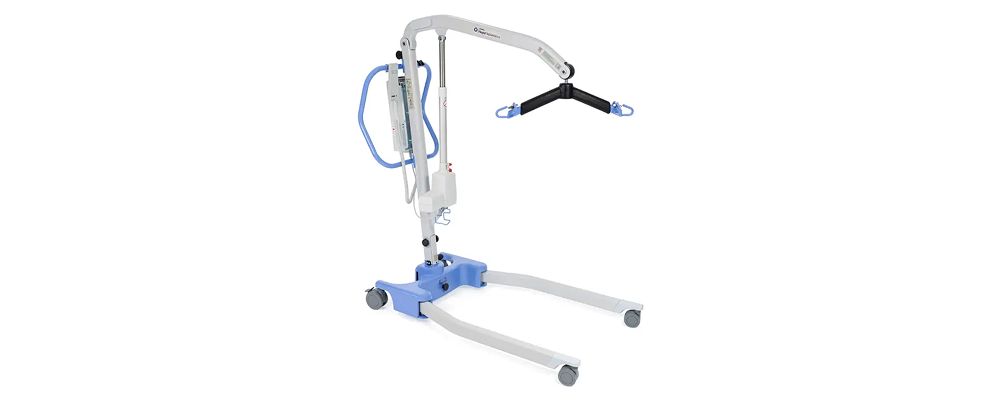
Hoyer® Advance-E 340 Folding Patient Lift
Product Highlights
- Tool-free folding frame
- Oversized steering handle
- Self-standing storage design
- Foot-operated base spread
- Lightweight aluminum build
- Assisted push pad
- Swan-neck leg design
Maxi Move® 5 Multifunctional Patient Floor Lift
The Maxi Move® 5 Multifunctional Patient Floor Lift offers the best transfer solutions to meet the daily challenges of caregiving. They offer flexibility and durability, supporting bariatric lifting with all-day powered performance.
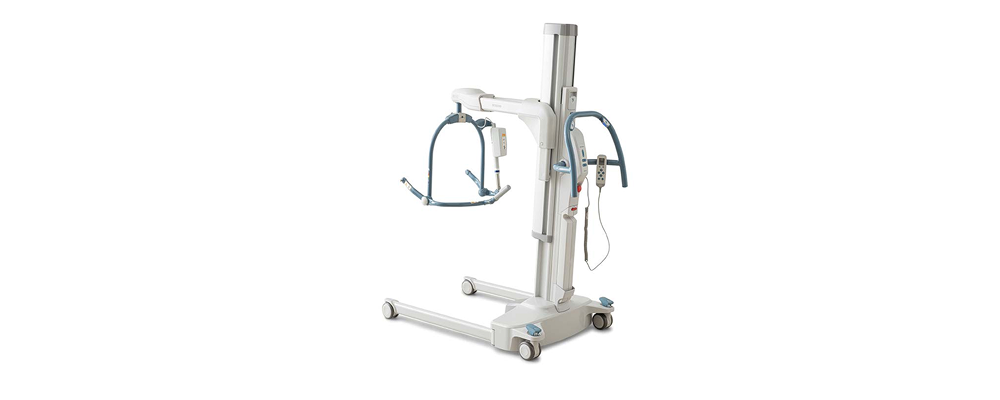
Maxi Move® 5 Multifunctional Patient Floor Lift
Product Highlights
- Multi-attachment compatibility
- Quick spreader bar change
- Wide sling options
- High bariatric capacity
- Durable daily operation
- Dual battery system
Med-Riser 450 Folding Patient Lift
The Med-Riser 450 Folding Patient Lift offers electric-powered lifting with a load-bearing capacity of 450 lb. It comes in a foldable design, an optional scale, and ergonomic controls to improve safety and convenience across care environments.
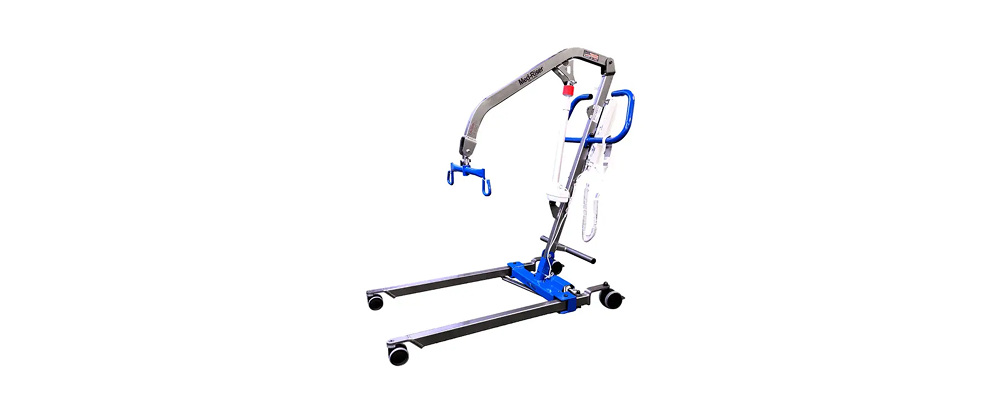
Med-Riser 450 Folding Patient Lift
Product Highlights
- Powered height adjustment
- 450 lb capacity
- Tool-free folding frame
- Dual control operation
- Optional built-in scale
- Ergonomic push handles
- Base leverage bar
Molift® Partner 255 Vertical Patient Lift
The Molift® Partner 255 Vertical Patient Lift features a vertical lift pattern, providing greater stability and comfort. It has a 560 lb safe working load that enables safe and balanced lifting.

Molift® Partner 255 Vertical Patient Lift
Product Highlights
- Eco-friendly battery system
- 560 lb capacity
- Vertical lift motion
- Four-point sling bar
Hoyer® Power 700 HD Bariatric Patient Lift
The Hoyer® Power 700 HD Bariatric Patient Lift has an outstanding 700 lb capacity plus powered base adjustments. Its bariatric design guarantees stability, increased range of motion, and greater control for caregivers.

Hoyer® Power 700 HD Bariatric Patient Lift
Product Highlights
- Motorized base expansion
- 700 lb capacity
- Low base clearance
- Padded multi-grip handles
- Extended floor reach
- Emergency stop system
- Interchangeable sling bars
Choosing the Right Electric Patient Lift with Med Mart’s Expert Support
When it comes to choosing the right type of patient lift, it involves an assessment of the patient’s mobility status, the workload of caregivers, and other limitations. At Med Mart, we streamline the entire product selection process by offering mobility equipment from reliable brands, offering proper guidance, and thorough support to meet the needs of different types of care settings.
The primary factors of consideration involved with choosing a patient lift involve:
- Patient weight capacity
- Level of mobility
- Care environment layout
- Frequency of transfers
- Storage and portability needs
Caregivers focused on choosing the best electric patient lift consider its long-term usability, battery life, and ergonomics. Our team can help align each care condition with a reliable mobility device designed to meet the routine demands of patient transfers.
Upgrade to Safer, Smarter Patient Handling Today
Safeguarding caregivers against back injuries involves the consideration of more than proper techniques. It needs the support of the right equipment and proper planning. Electric patient lifts reduce physical strain, enhance patient transfers, and support safer handling across different care settings.
At Med Mart, we stay committed to offering top-notch solutions for mobility, safeguarding caregivers, and promoting patients’ overall comfort. If you’re considering an electric patient lift, our team is here to help you find the right option based on your needs and care setup. Contact us today to find the right solutions that support your care needs and prevent any physical strain!
Frequently Asked Questions
1. How does an electric patient lift reduce spinal pressure during transfers?
Lifting systems with motion support the full weight of the patient and do not overburden the spine, thereby reducing stress on lower back structures over time.
2. Can electric lifts prevent long-term back damage for caregivers?
Regular use reduces cumulative musculoskeletal load and helps caregivers prevent chronic injuries related to repetitive bending, lifting, and sudden load changes.
3. Do electric patient lifts reduce caregiver fatigue during long shifts?
Powered transfers reduce physical effort, allowing caregivers to perform multiple movements without straining the back, shoulders, and core muscles.
4. How do electric lifts improve caregiver posture during transfers?
They encourage good posture during lifting, reduce forward bending, and aid in maintaining a healthier spinal posture during transfers.