


Electric patient lifts make caregiving easier. They help patients or seniors transfer to a bed or chair, or take them to the bathroom, and lifts eliminate the physical strain on caregivers. However, like anything else, lifts can wear down. If not maintained, lifts may fail, becoming unsafe for patients.
Regular maintenance of lifts helps ensure reliability, safety, and smooth transfers for users. At Med Mart, we take great pride in our large selection of electric patient lifts and offer tips to help families and caregivers maintain their equipment. When properly maintained, patient lifts are a valuable aid to caregiving and help seniors maintain their independence.
The Importance of Electric Patient Lift Maintenance
Regular maintenance ensures that electric lifts remain safe, reliable, and comfortable for patient transport. Maintenance eliminates unexpected obstacles, eases operation, and ensures safe transport for seniors and caregivers during usage. Below are the primary reasons maintenance is essential.
- Reduces risk of falls
- Prevents mechanical issues
- Provides smooth and safe operation
- Increases the expected lifespan of the lift
- Reduces strain on caregivers
- Increases the Comfort and dignity of the patients
There is a lot of strain on caregivers to handle routine work, which can be inconvenient, but maintaining lifts ensures safety and ease. Caregivers and family members often overlook the common mistakes when purchasing a lift that lead to excessive strain and premature wear. Identifying and avoiding these errors is the best way to guarantee a device’s long-term safety and usability.
Common Maintenance Challenges at Home
Electric lifts at home are highly susceptible to daily wear and tear, which may compromise safety, reliability, and performance if caregivers are negligent. The pitfalls to watch out for would include:
- Slings and straps that are frayed or worn
- Screws and bolts that are loose and affect stability
- Batteries that are worn or won't charge
- Dirt and dust that affect wheels and casters
- Brakes or controls that do not work
- Weak or damaged frames or a rusty frame
Accidents can be avoided by detecting these problems earlier. This will ensure operations run smoothly and lifts are safe for both seniors and caregivers. Other mobility aids required on a daily basis, such as those used for lifting, should be maintained for safety and reliability. For example, electric wheelchairs should be cleaned and checked regularly to facilitate seniors' safe mobility.
Simple Maintenance Tips for At-Home Lifts
Seniors or people with mobility issues can have a safer, more comfortable experience with electric patient lifts when they follow proper maintenance schedules. Adherence to basic care practices can help caregivers avoid mishaps and facilitate smooth daily practice.
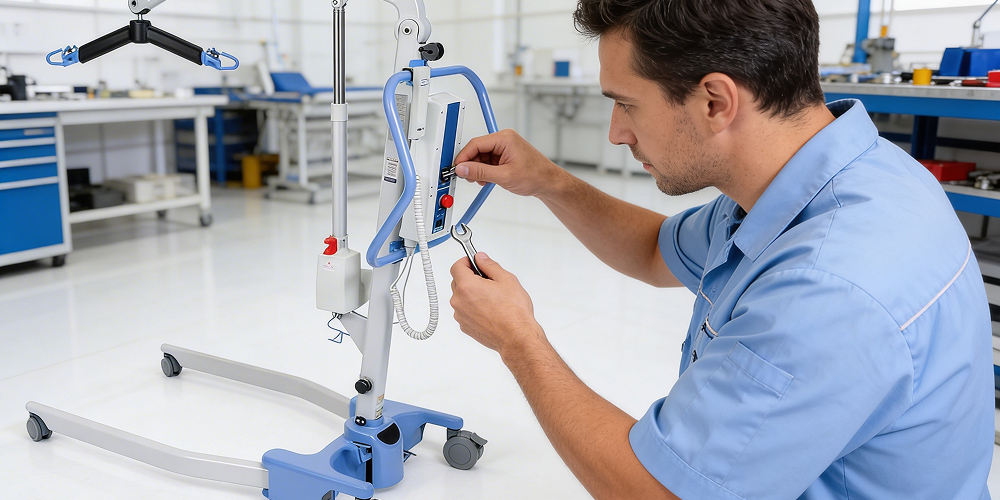
Inspect Slings and Straps
The patient is supported with slings and straps during transfers, and it is always necessary to keep them in proper condition. Frequent check-ups may help prevent unforeseen mishaps and ensure the elderly in their residential facility have comfortable, safe movement.
Always remember to check the slings and straps and make sure they are not damaged, like:
- Inspect the lifts for frayed edges
- Check for worn stitching
- Ensure attachments are adequate
- Verify the correct sling type
Accidents can be avoided by proper inspections, and patients are more likely to feel safe when the caregivers make transfers with greater confidence and less physical burden.
Examine Screws, Bolts, and Fasteners
The screws and bolts may be loose or damaged, which can significantly affect a lift's stability. A thorough examination of hardware ensures the lift runs smoothly, reducing the risk of accidents and contributing to the safety of caregivers and elderly individuals.
These are the key points that should be checked regularly:
- Tighten the bolts
- Replace bolts
- Make sure attachments are bolts
- Replace damaged clasps, clips, and rings
A stable, reliable, and safe lift is provided by well-maintained hardware so that normal transfers within the home are secure.
Maintain Battery Health
The most significant factor in the safe and proper operation of electric lifts is battery performance. Proper maintenance will prevent surprises and failures, and the lift will be available at any time to relocate the patient with the usual frequency.
The following are the best practices that can be used to conserve battery life:
- Batteries need to be fully charged at all times
- Batteries should not be overcharged
- Worn cells need to be replaced
- The batteries should be kept dry
Proper battery care keeps the lifts on call at any time, minimizes downtime, and ensures a smooth, controlled transfer of seniors.
Clean Frames and Moving Parts
Over time, dust, dirt, and debris accumulate on frames, casters, and joints. This reduces performance and increases wear. Proper cleaning routines can keep the lift maintained, functioning smoothly and safely daily.
The main areas to focus on while cleaning are:
- Thoroughly wipe the frame
- Remove debris from the joints
- Clean the wheels and casters
- Avoid using harsh chemicals
Mobility devices such as lift chairs enable the elderly to get into or out of a chair and sit comfortably, and must be maintained in good condition to work safely.
Check Wheels, Casters, and Brakes
Wheels, casters, and brakes have been used to control safe movement in transfers. Effective checks ensure the absence of inadvertent rolling or unsteadiness, which creates a safe environment for seniors and caregivers at home.
Carefully inspect for test mobility and locking mechanisms:
- Mobility and locking functionality should be tested
- Check brakes often
- Check and align all casters
Regular check-ups are also effective in maintaining balance, preventing accidents, and giving caregivers the freedom to help patients get to their beds safely and without fear. Caregivers should understand the difference between portable and fixed patient lifts. They each require specific care and attention.
Lubricate Joints and Pivot Points
Joints and pivot points are some examples of moving parts that should be lubricated to avoid wear and stiffness. Proper lubrication will be required to ensure no additional mechanical strain and facilitated lift.
Regular lubricating includes:
- Lubricating pivot points
- Greasing moving joints
- Avoiding the use of excess oil
- Wiping off extra spills
Regular lubrication also makes lifts quieter, more efficient, and smoother. This further prolongs the equipment's lifespan, and the transfers are safe and painless.
Schedule Professional Servicing
Professional servicing will help maintain internal parts safe and working, even during routine checks. Professional attention would prevent serious breakdowns and prolong the lift's working time.
It is important to follow manufacturers' guidelines for critical professional inspections. So, always ensure:
- To follow the annual inspections as suggested
- Replace the damaged or worn-out parts immediately
- Getting the electrical systems inspected thoroughly
- Verification of the adequate safety features
Professional servicing provides a sense of assurance because it helps ensure that lifts are operating safely and reliably on a day-to-day basis.
Electric Lifts Offered at Med Mart & Expert Maintenance Tips
Med Mart offers a wide range of electric lifts. Every electric lift is built to ensure the safety, comfort, and dependability of all at-home patient transfers. Each lift is designed for ease of use and smooth operation for all caregivers and seniors.
Med-Riser 450 Folding Patient Lift
The Med-Riser 450 Folding Patient Lift offers dependable service and smooth lifting for home transfers. It has a folding, compact, and easy-to-store and transport design and is safe for caregivers and seniors.
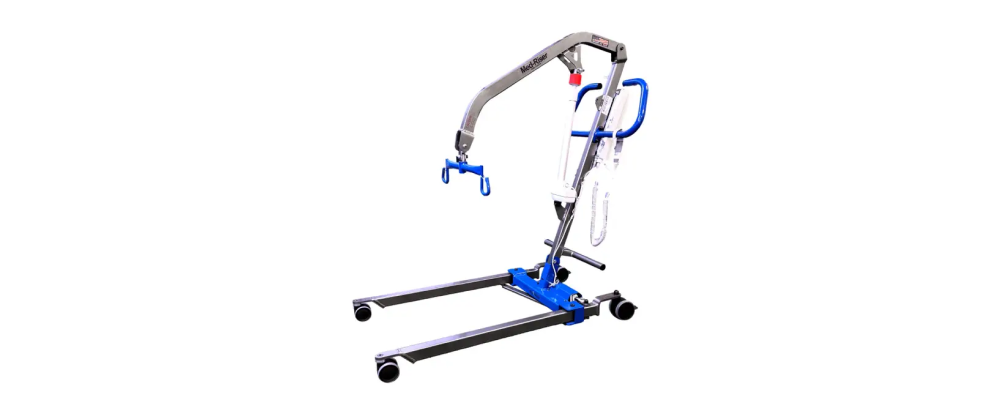
Med-Riser 450 Folding Patient Lift
Key Features
- Electric-powered lifting mechanism
- 450 pounds maximum weight capacity
- Maintenance is easy
- Dual controls
- An integrated weighing scale can be included
Maintenance
- Inspect slings every week
- Fully charge the battery
- Clean the frame every month
Hoyer® Advance-E 340 Folding Patient Lift
The Hoyer Advance-E 340 Folding Patient Lift features lightweight construction and reliable electric support. It simplifies home transfers, making them safe and comfortable for seniors in small or shared living spaces.
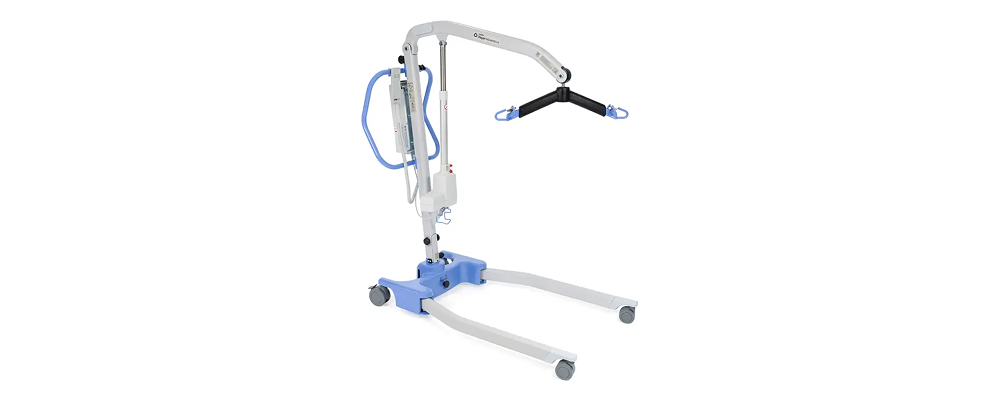
Hoyer® Advance-E 340 Folding Patient Lift
Key Features
- No-tools frame folding
- Aluminum lightweight design
- Oversized maneuvering handle
- Foot pedal base control
- Self-storage, upright capability
Maintenance
- Check bolts
- Slings should be retired and worn
- Wheel and caster cleaning
- Follow the instructions for battery care
Protekt® All-In-One Transfer Lift
The Protekt All-In-One Transfer Lift is a portable, folding transfer lift designed for controlled transfers at home. It provides security, steadiness, and portability to the elderly and convenience to the caregivers.
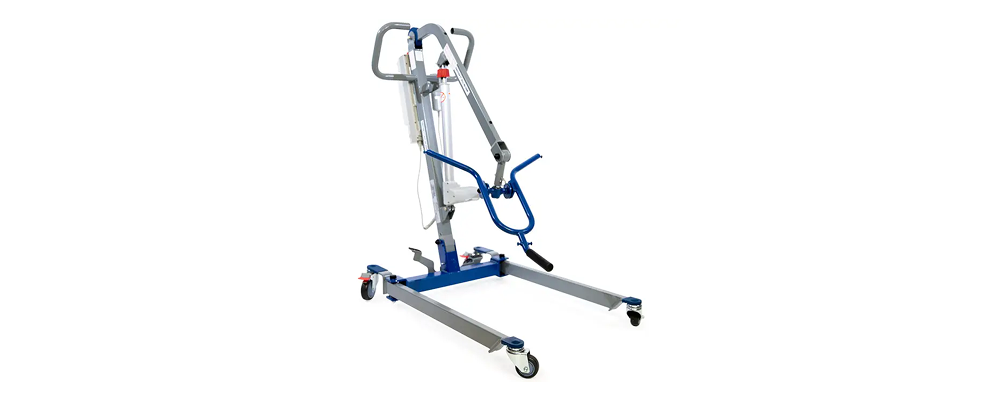
Protekt® All-In-One Transfer Lift
Key Features
- Lightweight and foldable for easy transport
- Compatible with clip-style sling
- Less patient sway for safety
Maintenance
- Check the joints regularly
- Clean the frame and casters regularly
- Replace slings that have deteriorated to maintain safety
- Check and maintain the brakes to ensure stability before using the lift.
Hoyer® Deluxe Power Patient Lift
The Hoyer Deluxe Power Patient Lift provides smooth, consistent operation. It is also available in a variety of sling configurations, ensuring safe, comfortable home-to-home transfers for elderly individuals who need full-time care.

Hoyer® Deluxe Power Patient Lift
Key Features
- Compatible with multiple slings.
- Smooth rolling dual wheels.
- Guard legs for protection
- Base width is adjustable
- Can lift to 400 pounds
Maintenance
- When slings begin to fray, replace them
- Lubricate brakes every week
- Test brakes weekly
- Batteries need to be fully charged
Maxi Move® Powered DPS Patient Lift
The Maxi Move Powered DPS Patient Lift offers excellent stability and features suitable for home care. It promotes frequent, safe, and controlled transfer of seniors, including bariatric patients.

Maxi Move® Powered DPS Patient Lift
Key Features
- Flexible care design
- Compatible with a wide range of interfaces
- Can lift to 500 pounds
- Battery operation
Maintenance
- Check all bolts and screws
- For best operation, the wheels need to be cleaned
- Check slings before each use
- Servicing the battery needs to be done according to the manufacturer's instructions
Other Types of Patient Lifts You Can Explore at Med Mart
In addition to electric models, Med Mart also offers a variety of patient lifts to meet various mobility needs at home. All the models are safety-oriented, durable, and easy for home caregivers in the United States to use.
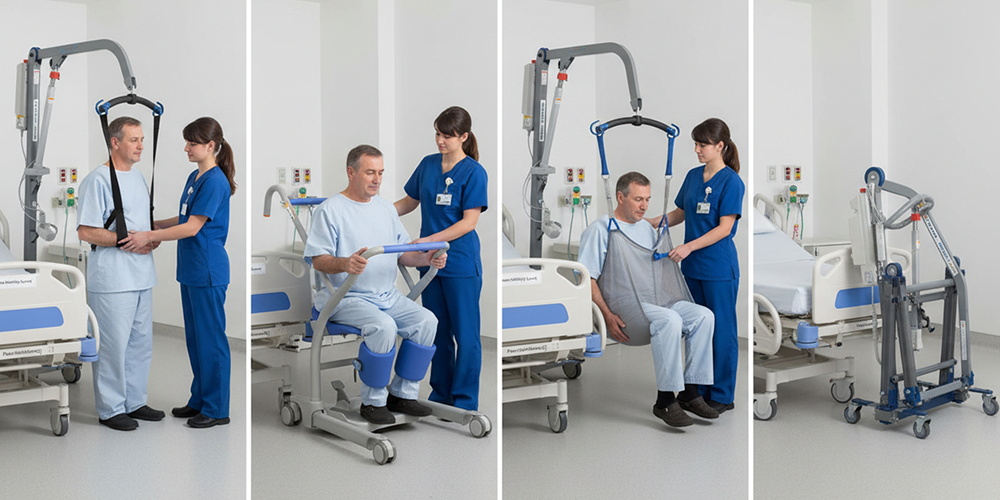
Manual Patient Lifts
Manual patient lifts enable caregivers to move patients safely without electricity. At home, they rely on a simple and reliable mechanical mechanism that allows them to move stably.
Sit-to-Stand Patient Lifts
Sit-to-stand lifts are used when a patient can partially support their own weight. They facilitate safe movement from sitting to standing and also minimize the burden on the caregivers during everyday home transfers.
Heavy-Duty Patient Lifts
Heavy-duty lifts are tailored to bariatric patients or increased weight limits. They are reinforced with strong frames and secure holding to enable safe, stable transportation at home.
Folding Patient Lifts
Folding patient lifts are small, easy to move around, store at home, and transport. Moreover, they provide seniors with a safe and smooth transfer.
Specialty Patient Lifts
Specialty lifts accommodate special requirements, e.g., bathing or toileting. They address specific mobility issues and ensure the experience of seniors and caregivers is comfortable and safe.
Med Mart’s Approach to At-Home Lift Safety
At Med Mart, we specialize in offering safe, durable, and comfortable lifts to seniors. We have high-quality mobility equipment to provide smooth, secure home transfers. With Med Mart, caregivers and families will enjoy:
- Reliable, long-lasting lifts
- Guidance on safe and proper use of the lift
- Customized solutions for the home
- Support for patient safety and comfort
Every lift is designed to ease caregivers' workload and preserve seniors' dignity.
Start Your Maintenance Routine Today
Routine maintenance makes electric lifts safe, comfortable, and reliable for seniors. Simple care routines, such as cleaning, battery care, and professional care, will help prevent accidents and extend the lift's lifespan.
Combining high-quality Med Mart lifts with consistent maintenance supports safe, stress-free, and manageable daily care for patients and caregivers alike. Contact us to explore trusted lifts, maintenance solutions, and expert guidance for safe at-home patient care.
Frequently Asked Questions
1. How often should at-home electric lifts be serviced?
Service your lift annually by a professional, or more frequently as recommended by your lift's manufacturer.
2. Can caregivers perform routine maintenance themselves?
Yes, caregivers may perform their own maintenance as long as they conduct inspections, cleaning, and battery management in accordance with the manufacturer's guidelines.
3. How do I know when slings or straps need replacing?
Worn, torn, or damaged sling straps should be replaced immediately.
4. What cleaning methods are safe for home lifts?
Mild, non-abrasive cleaners are safe to use. Do not use water near electrical parts.
5. Can regular maintenance extend the lift’s life?
Yes. Regular maintenance increases reliability and reduces costs. It will also extend the lift's lifespan.