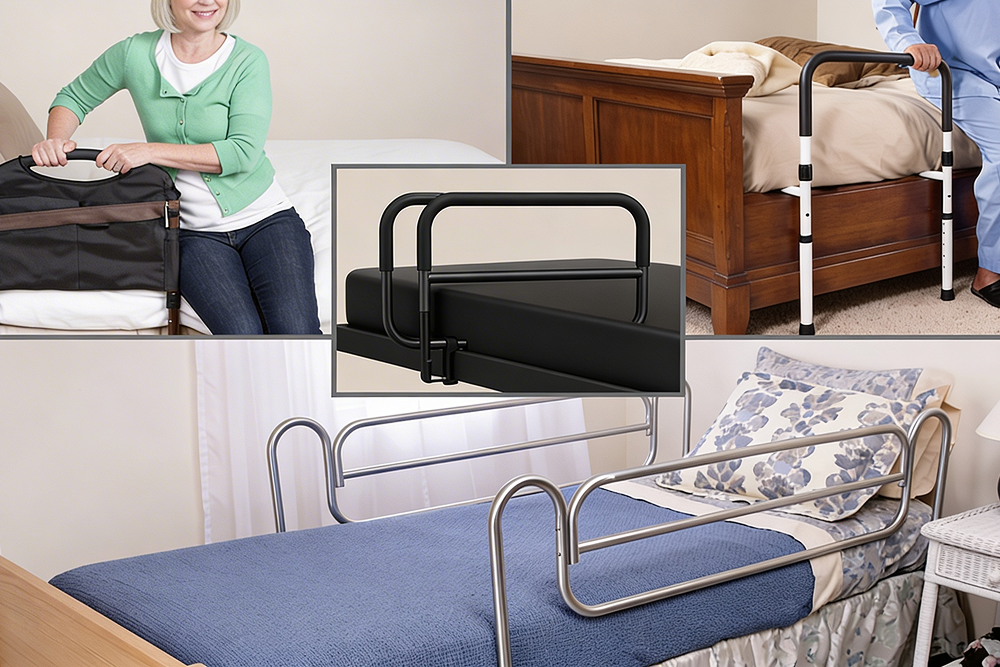
Looking for the perfect at-home care bed for your loved one?
There are plenty of options on the market: from hospital beds, to MedSurge beds, long term care beds, adjustable
beds, and more.
Where do you start? How do you know what bed type you need?
Here, we’ll go over the difference between two main types of at-home care beds:
Hospital Beds
Adjustable Beds
With this guide, you can make an informed decision for your loved one. The right bed improves limited mobility, creates
positive health outcomes, and can make everyday life easier than ever.
Hospital Beds
As you might guess from the name, hospital
beds were originally designed for inpatient and outpatient care. MedSurge
beds, for example,
are surgical beds that are only used inside hospitals (not generally for home use).
Today, there are plenty of “at-home hospital beds” on the market. These beds have more features than a typical home
care bed, while still being relatively affordable.
Want to take you or your loved one’s at-home hospital
bed to the next level of comfort? Our top tips for alleviating pressure, customizing your
hospital bed, temperature regulation, and more.
Home Hospital Bed Comfort Checklist
Mattress
Would a different material or type of mattress be more comfortable?
Bed Size
Is the hospital bed correctly sized? Will I need an adjustable bed to accommodate multiple patients?
Accessories
What add-ons and accessories would improve daily comfort and mobility?
Hygiene & Cleanliness
Are my bed materials easy to clean?
Temperature
Are tools to regulate temperature accessible to my loved one?
Personalization
What bedding, decorations, or personal items can I add to make the hospital bed feel more comfortable?
6 Ways to Make Your At-Home Hospital Bed More Comfortable
Do you have a loved one who uses an at-home hospital bed? Do they spend a significant portion of their time in bed?
At-home hospital beds can transform daily care for both caregivers and loved ones.
Are you looking to make your home more safe and comfortable for an aging loved one? Or are you helping “remodel”
their home to be more accessible?
There are plenty of steps that you can take in order to make a living space safer for elderly individuals. These
recommendations don’t require expensive construction costs (some are free!), and can make all the difference in
everyday life for you or a loved one.
Read on for our top tips on creating a home perfect for “aging in place”.
1. Clear Clutter and Obstructions
This is one of the most important steps to keeping your home accessible. Best of all, it’s completely free of cost!
Clean up your home to reduce the risk of falls and make it easier to navigate. Remove piles of clothing on the
floor, re-organize furniture to create clear walkways, and sort cluttered cables.
Not only will this reduce tripping risk, but a clean home provides a sense of mental calmness. This can decrease
anxiety and make it easier for a loved one to independently navigate
Do you want to make sure that an elderly loved one is safe living at home? Make sure you consider fall prevention.
Unexpected falls are one of the most dangerous risk factors for aging adults. Falls become more common as we age
because we lose muscle mass and struggle to keep our balance. A simple fall out of bed can lead to broken bones,
head trauma, and other scary consequences.
Here’s the good news: there are modern hospital
beds and tools specifically designed to prevent falls out of bed. With the right hospital bed
at home, you can have peace of mind knowing that you don’t need to worry about falls in the night.
In this blog, we’ll go over our top tips for preventing falls, top hospital
beds, and other features to look out for to keep elderly loved ones safe.
Top Tips for Preventing Falls from Bed
1. Use a Hi-Low Bed
Safely getting in and out of bed isn’t always easy! A hi-low hospital bed is a type of bed that can easily be
adjusted to different heights using a built-in motor. This
For many power wheelchair users, this mobility device can be the single most important tool to lead an independent, active, and fulfilling life. However, just like any other device or car, a power wheelchair can occasionally break down, require maintenance, or need to be replaced altogether.
The best time to start planning to purchase a new power wheelchair is before you need one. In this guide, we'll go over the average lifespan of an electric wheelchair, as well as signs to look out for when your mobility device may be reaching the end of its life. Planning ahead gives you the time to research and make an informed decision, rather than rushing into a quick purchase because of a sudden emergency.
How Long Do Power Wheelchairs Last?
The average lifespan of a power wheelchair is around five years. However, this can vary depending on factors like the frequency of use, terrain it’s used on, and how well you take care of it. This lifespan estimate is for the general frame of the chair: other
As we grow older or experience illness, accessibility can play a critical role in visiting new destinations.
If you regularly use a manual or powered wheelchair, power scooter, or rollator, you're all too familiar with the importance of accessibility. There's nothing worse than being excited to visit a bucket list destination or new restaurant, only to find uneven ground that makes it inaccessible to wheelchair users.
Don't let accessibility limitations negatively affect your travel experience. For those unexpected travel situations, you need portable ramps. In this guide, we'll go over how these access ramps can transform your independence while on-the-go.
What is a Portable Wheelchair Ramp?
A portable wheelchair ramp is what it sounds like: a wheelchair ramp designed to fold or disassemble with ease. These ramps are lightweight, offer easy installation, and provide a proactive and flexible solution for overcoming accessibility challenges when traveling.
For customers, loved ones, or anyone with a mobility device, a wheelchair ramp can make a world of difference in everyday life. These ramps let users safely and independently access buildings and places that would otherwise not be possible for them.
If you’re a business owner, installing a wheelchair ramp at your business may be mandatory in order to comply with ADA requirements. But these ramps aren’t just for businesses– consider installing a ramp at your home for greater day-to-day accessibility.
In this blog post, we’ll cover the differences between a temporary vs permanent wheelchair ramp so that you can make the best purchase decision for your unique needs.
What are Wheelchair Ramps?
Wheelchair ramps are platforms that make it easy for people with mobility restrictions to navigate inclines and declines. They can be essential for those who use wheelchairs, power scooters, rollators, and even busy parents with strollers.
An accessible alternative to stairs (and far more affordable
Business owners and ADA requirements- a guide to navigating ADA compliance.
If you’re a business owner with a physical storefront or office space, it’s important that you understand and comply with the Americans with Disabilities Act (ADA). This civil rights law, which was launched in 1990, is a cornerstone of accessibility requirements for individuals with disabilities. Under Title III of the ADA, all businesses that are classified as “public accommodations”— a term that refers to businesses that are open to and serve the public— must comply with the ADA.
For business owners with physical spaces, ADA compliance includes ensuring that visitors with a mobility device or mobility limitations can safely navigate your building. In practice, this can mean things like offering accessible parking spaces, installing wheelchair ramps to create accessible routes adding handrail extensions to stairs, and more (also see Med Mart's portable ramps).
Do you know what the most dangerous room in your home is?
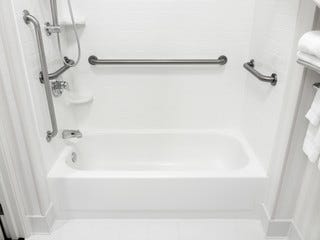
You may be surprised. Even considering the hot stove and sharp knives in the kitchen, bathrooms are statistically the most accident-prone room in your home.
One report by the CDC in 2008 found that an estimated 234,094 accidents occurred in residential bathrooms every year. These accidents can range from broken bones to serious head injuries.
For elderly individuals or those who struggle with mobility, bathrooms can be particularly tricky to navigate safely due to slippery floors, hard tile, and frequent transfers.
Don’t let you or a loved one become a statistic. Here are some of our top tips to improve the safety and mobility of your home bathroom.
Consider a shower wheelchair
Shower chairs can take the headache out of tricky transfers from a wheelchair to shower or tub. These non-corrosive waterproof chairs are designed to be wheeled directly into and used in the shower– no transfer required.
Navigating the Tax Landscape of Medical Devices – A State-by-State Guide
When purchasing medical devices for personal or family use, your state may impact the overall cost of your items. While most states provide some form of sales tax exemption for medical devices, the details vary from state to state.
In general, most states provide a blanket exemption for all medical devices, or a tax exemption for medical devices prescribed by a licensed provider. However, there are some exceptions.
In this blog, we'll provide an overview of medical device taxes in each state.
Exemptions for All Prescribed Devices
To meet the tax exemption, these states require that a medical device be either prescribed or dispensed by a physician.
Arizona, Arkansas, California, Colorado, Florida, Hawaii, Idaho, Indiana, Iowa, Kansas, Kentucky, Louisiana, Maryland, Massachusetts, Michigan, North Carolina, Oklahoma, South Carolina, South Dakota, Texas, Utah, Washington D.C., and West Virginia.